Resource: Gen Alpha Report from One Hope

I always try to stay up to date on how culture is shifting, what students are engaged in, and what future generations are turning to. I am also always on the lookout for free resources; we all know that money is tight in student ministry. So when those two pieces come together, I jump at the opportunity to gain resources, insight, and equipping.

Enter One Hope. I wasn’t super familiar with this ministry until recently, but found out about it through an email blast from one of their ministry partners. They sent out an email with a title asking, “Want to know more about gen alpha for free?”

Of course I had to check it out. And what I found was a great resource that is rooted in research and diligent study of this upcoming generation. One Hope’s mission is “to affect destiny by providing God’s eternal Word to all the children and youth of the world.” With a mission statement like that, and by doing some digging on their website, I knew I had to check out this report.

In order to download the report all you need to do is go to this link and enter just your name and email address. A few moments later check your inbox for the full sixty three page report. This is a great resource that is highly informative and provides insight into not just the habits and rhythms of Generation Alpha, but also insight into how they engage with media, families, and faith.

I’ll be honest, there was information that I found to be very helpful as we lead and care for the upcoming generations. As we seek to reach students where they are at, it is helpful to know how they are viewing their lives, relationships, and faith because it allows us to help shepherd and disciple them and their families. This report provides us with a wealth of knowledge and ways to practically engage with our students.

You may not agree with all the findings, or perhaps you haven’t yet seen some of these perspectives pop up in your ministry just yet. But knowledge and insight are powerful tools that allow us to grow and pour into our students in effective and beneficial ways. My encouragement would be to download and read the report and think critically about how we can care well for Generation Alpha as we continue to point them to Jesus.

Resource: FYI Report on Youth Leader Burnout & Wellbeing

I love getting resources whether they are digital or physical. I’m the guy who is always signing up to get newsletters, promotional materials, and always looking for a free t-shirt or hat. But aside from the random freebies and additions to my closet, I’m also on the lookout for resources that help me grow as a youth pastor, an individual, and as a disciple of Jesus.

One of the resources I recently obtained had to do with the holistic health of student pastors, put out by the Fuller Youth Institute. Back in the days of the Youth Specialities annual conference, I signed up to receive their emails and digital resources, and I can honestly say I’ve never been disappointed with what they send.

This last week I had an email from FYI pop into my inbox with this title: “🚨 ALERT: High burnout month ahead!” I’ll be honest, the title immediately grabbed my attention and upon reading it I saw that it contained an amazing free resource. The “FYI Report on Youth Leader Burnout & Wellbeing” is available as a free download at this link. You will need to enter your name and email info, but I can promise you that it is totally worth it.

Right on the sign up page for the free download, Fuller Youth Institute gives you a brief preview of what’s in their report. It includes “the latest research on the experiences of today’s youth leaders, firsthand insight and stories, tips for developing strategies, and practical recommendations.” What I can tell you is if you thought that sounds good, the report is a hundred times better.

Fuller’s report is constructed in an easy-to-read way, filled with stats and solid research, punctuated by real life experiences from many different youth leaders, investigative in its approach, and encouraging and challenging in its challenge to youth leaders, churches, and church staff. At the end of the day this report is encouraging because while it focuses on the realities of burnout amongst youth workers, it doesn’t claim that as the end result.

Instead, it highlights how we can overcome and avoid that result so we can thrive in our roles. The encouragement to pastors and church leaders is also beneficial as it provides them with thoughtful and practical ways to come alongside youth workers as they walk with them and encourage them.

All in all, this is an amazing resource to read through and be aware of. The end game may still be a struggle, especially if you don’t have support in your role. But this report helps you to see you aren’t alone and provides solid responses to help you thrive in your position.

It also equips you with resources to highlight the necessity of partnership within the church that may help others come alongside of you. I just wouldn’t recommend passive aggressively placing this in your senior pastor’s mailbox. Instead, consider sharing it with them over coffee or lunch, or doing the same with an elder or two. The more relationally intentional you are in sharing this with leadership, the greater the potential they will listen and respond.

So what are you waiting for? Go download this report now!

Quick Tip: Preparing Your Budget

Depending how your church’s fiscal calendar works, you may be in the early stages of preparing your budget for the next year. Our church just walked through preliminary budget conversations with each ministry and this year we had to start from scratch and account for each budget line.

This may sound tedious and scary, but our team has done well at tracking our budget and accounting for all of our expenses over the past few years so building from the ground up was not as difficult as it may seem. But when we heard that we had to account for everything and substantiate why it was needed for the ministry, it caused us to pause and wonder if budgets were going to be cut.

Typically budget meetings, especially for youth ministries, can be scary because we wonder if leadership will understand why we need to buy dozens of pool noodles, seemingly unlimited boxes of Cheetos, and hundreds of water balloons. But we promise, these are all absolutely necessary.

Kidding aside, these moments can feel super scary because there is a reason and rationale for why we ask for our budget, and we worry that if it’s cut our students and families will feel the fallout and affects. So how do we try to keep that from happening? Is there a way we can still maintain our budgets and find a way to help leadership see the necessity of what we are asking?

Well, today I want to share a couple quick tips that I have utilized when preparing a budget submission or conversation.

First, know why you’re asking for what your budget reflects.

Sometimes you’ll get asked questions about why certain line items are there or why exactly you’re requesting a certain amount for a budget line. Knowing your answers and being able to confidently share your reasoning will help to explain your budget and your rationale.

Second, aim high and shoot low.

My encouragement is to go into these meetings with a budget that you would dream of having. Don’t go in being greedy, but go in asking for what you’d dream of having for student ministries. In the same moment, go in with a realistic expectation as well. You may not be able to purchase three 9 Square sets, but you may be able to get one. That’s an example of aiming high, but knowing that the realities may be different.

Third, be a good steward of your current and next budget.

Part of being a leader in a ministry is practicing good stewardship. We need to appropriately manage the funds that God has provided us with through His church, and that means we need to steward our current and future budgets well.

We shouldn’t spend frivolously or haphazardly, but instead should honor our budget and let that be reflected in how we spend it. This may mean that questions or statements may come like, “You did okay with less last year,” but this is where we can explain why we are asking for something different this year.

Lastly, focus on what matters.

I am not saying to simply focus on what matters when you create your budget but also if your budget isn’t approved for what you wanted. When you build your budget for your ministry always do so with your vision and the Gospel in mind as you seek to love and care for your students and families. And should your budget not get approved or be altered, remember that budgets aren’t ultimate. Yes, they allow for us to do things and to scale the ministry, but they don’t allow us or keep us from fulfilling the calling God has placed on our lives.

Seek to work within the context and budget that has been stewarded to you and as you do that, remember that everything you have is a gift from God to you. With this frame of reference, our perspective and understanding of utilizing our budget is shaped differently and helps us to seek to honor God in all aspects of our careers.

Resource: A Fun Christmas Party Activity

This year at our Christmas Party we are bringing back an activity we took a risk on last year because it paid huge dividends. The activity: decorate your own Christmas t-shirt with the opportunity to win a prize for your small group.

Last year we went with Christmas hoodies but that proved to be cost prohibitive, so this year we switched to t-shirts. The excitement, expectation, and energy this competition created has blown us away, and so we want to share this with you as a resource you could incorporate into your Christmas parties.

The objective: Create a Christmas-themed t-shirt that will impress the judges and allow your team or small group to win the prize.

The rules: Teams or small groups must design and create a Christmas-themed t-shirt using only the elements on their table. They cannot bring in any outside elements. Teams may exchange items with the game host if there are additional items available. Teams will have a set time to create their shirt and when the time ends, a member of the team must be wearing it.

Penalties: Teams lose points for using outside items, not having the shirt on at the end of the build time, having items on the floor (trust us, your facility team will thank you), not listening, or whatever else you’d like there to be penalties for. The judges can choose how many points to deduct for each offense.

Judging: Each person wearing the t-shirt gets 30-60 seconds to present (think runway style) their group’s design and explain why they should win. Judges will confer and choose the team they think has won. Judges can use scorecards to rank the teams in different categories (most unique, most likely made by someone’s grandmom, most over the top, most annoying, etc.) on a scale from 1 to 5. Judges can deduct points throughout the competition for penalties.

Prizes: We decided last year to incorporate a prize that we could reuse each year that would allow students to have a lasting legacy at our Christmas parties. We found an inflatable snowman that we have the winning groups sign with markers. We bring it out each year for everyone to see past winners and for the new winners to sign.

Variants: We are incorporating a new element this year. Teams can win advantages by participating in two additional competitions. The first competition is a lookalike contest where they need to do their best to look like a member of our student ministry team. The winners of that competition receive a golden gift box of extra supplies that only their team can use. The other competition is the team who brings the most first time guests gets a time advantage.

Supplies: We use large or extra large t-shirts with a variety of decorations including bells, tinsel, ornaments, bottle brush trees, fairy lights, jingle bells, pipe cleaners, bows, ribbon, and any other fun dollar store or Amazon items. We also make sure to have glue guns and glue sticks to attach the items, and we found these for a good price on Amazon a year ago. Lastly, we got some multicolored fabric markers to allow teams to draw and write on their shirts. The key is utilizing fun elements that are inexpensive.

Book Review: The Quick Reference Guide to Counseling Teenagers

Working with students means that inevitably you will end up engaging in counseling sooner than later. One of the things we have said often is know your limitations and know when to refer out to professionals who are trained in the areas you are not. That doesn’t mean you won’t ever engage in counseling, but it does mean we should know when and be able to refer out to trusted, licensed counselors.

But what about those times that you do need to offer counseling and advice? What do you do in those moments? My first guidance would be to seek out resources and training to help you grow as you serve and care for your students. One of the best resources I have found to help with these parts of our ministry is The Quick Reference Guide to Counseling Teenagers by Dr. Tim Clinton and Dr. Chap Clark.

This is not a catch-all for counseling, nor does it make us a licensed clinical counselor, but it does provide beneficial guidance, resources, and productive ways to minister to and care for our students. This is also only one book in a series of counseling books that have been put out from the same group and all of them are incredibly helpful.

To start things off there is a table of contents that highlights various counseling areas that are listed alphabetically for a quick reference. Once you get to the area you are looking for assistance in, you will find that it starts with some case studies (portraits) and then definitions and key thoughts to help you understand what you are dealing with and how it can manifest in different people and circumstances. These will also help to outline and highlight various symptoms and/or patterns that may be exhibited in someone who is struggling.

That is followed by questions to ask which are often in the style of an intake session for counselors coupled with conversation prompts. Some of these questions will be for just the student and in others there will be questions for both parents and students. Then the authors provide action steps which can be for students and parents depending on the category, biblical insights, and prayer starters which are a must for any pastor or leader who is offering guidance and counseling. Lastly they offer up additional resources that are extremely helpful.

Overall, this book is a must for anyone serving in student ministry because it provides you with the resources and guidance you need for counseling students. For those who have minimal training in counseling this book provides a ton of helpful guidance and insight into how to care for your students. The biblical aspects are so necessary in our line of work and provide you with ways to help your students continue to grow in their discipleship relationship with Jesus even as they grapple with difficult aspects of their lives.

Some of the critiques of this book is that it is outdated (it was published in 2010) and it doesn’t have all the issues that student workers will encounter in our present environment. So it is highly important to keep that in mind as you look for the areas in which you’re going to be offering counsel. This isn’t a criticism of the book but a word of guidance for those who utilize this resource: the prompts can feel very basic and scripted if you simply state them as they are in the book (i.e. the questions, biblical insights, and prayer prompts). My encouragement would be to make these pieces personal and relational as you counsel your students.

It is helpful to remind everyone that if you don’t have a counseling degree and verification, you are not a counselor but a pastor who is offering care with counseling elements. Don’t ever offer counsel you are unsure of or don’t have the training to offer. Instead be willing to offer guidance and advice, and be willing to refer when needed.

At the end of the day, this book is one I would highly recommend to anyone who works with students. It is incredibly beneficial and will make you a better pastor, shepherd, and counselor to your students, leaders, and families.

Resource Review: The Pour Over

Have you ever lived or worked in an area that seemed polarized in their viewpoints and the news they intake? Have you ever felt that you were surrounded by partisan viewpoints? Are echo chambers something you have begun to notice are a part of your life or the lives of those you minister to?

As someone who was once very partisan and also a news junky for many years, I found it easy to fall prey to one-sided dialogue and talking points. Over the past ten years I have noticed my views start to grow and shift as I began to engage deeper with Scripture and its practicality in our daily lives.

I was listening to a podcast a couple of years ago, and they shared about a podcast and newsletter called The Pour Over and how this podcast offered up a centrist view of the news with a focus on Christ. I am not going to lie, my first thought was excitement but I was also skeptical because I had yet to find an unbiased view of the news.

I turned on the podcast and was blown away by what I heard. The podcast and newsletter (which are one in the same; one is audio and the other print) tracked the bigger news stories of the past couple of days and summarized them while then offering a Christian perspective. The Christian perspective can involve Scripture, quotes from pastors or theologians (past and present), or even quotes from the Book of Common Prayer. Each of the summaries has links to the full story and the links come from a litany of verifiable news sites from across the political spectrum.

The newsletter and podcast are also short in that they have never exceeded ten minutes, and often fall under seven minutes in podcast length. That means you can easily listen to it on your way to work, at the gym, or even in the morning while making your coffee.

Another aspect of The Pour Over is they have an affinity for dry humor and quick whit. Whether you listen to or read the newsletter, you will find that there is a little bit of humor thrown in to make you chuckle. It is typically done in word play for a news story and it is not done to demean or diminish anyone or anything.

Each of the people who report for the newsletter on the podcast do so in steady (not monotonous) tone because they aren’t seeking to promote a specific viewpoint or utilize emotions to stir the pot. As they seek to provide a politically-neutral approach to the news, they have people report on it who are easy to listen to but not seeking to inflame a certain viewpoint or perspective.

Recently, within the last year, The Pour Over has launched another resource specifically for families with younger children called Decaf: The Pour Over for Families. This is a once-a-week newsletter that highlights a specific news story from the week and provides parents with insightful questions to ask their children called “Read, Reflect, Respond.” This is a great resource for families to engage with their children and thoughtfully talk through topics and circumstances with a Christian approach that may be difficult to interact with. But beyond just young families, these are questions that are helpful for anyone to engage with as they look to thoughtfully engage with a Christ-centered approach to the news of our day.

This resource has helped me in being able to pull myself away from being a news junkie and instead find a way to biblically engage in a politically-neutral approach to the news. I’ve been able to remove an echo chamber and instead begin approaching the news with a better, Christ-centered response. I have referred this podcast to parents, friends, students, and leaders because it truly helps us to have a Christ-focused view of our world and helps to shape our hearts, minds, and souls to be more attune to God’s response to this world. This is an amazing resource that I cannot recommend enough and I would challenge you to check out The Pour Over and see what you think.

Our Picks: A Christmas Resource

You are probably reading this after Christmas, but we wanted to share with you a resource we have found incredibly beneficial and meaningful for students and ourselves. Our desire isn’t that you rush to buy this resource and accomplish it, but instead to recommend something you can utilize in years to come in your ministry and personal life.

This resource is the Advent Study Book by She Reads Truth. If you click on the link it will actually take you to a resource page that has all of their advent guides for this year listed. They have resources for men and women that are also applicable to students, resources for children, and both physical and digital options. And if you purchase a study book, they will send you even more resources through email.

We have written about She Reads Truth before and the devotional guides that they have. These guides are hugely beneficial for students and they have all different types of studies that can relate to different students and learning styles.

This is a great resource for Christmas and one that can be utilized in small groups, for individuals, or even as a guide for leading a large group study through advent. She Reads Truth sets up this study to be easily accessible and relatable to anyone who picks it up, and provides connections from Scripture to our daily lives. One of the ways this is helpful to students is highlighting the connectivity of the Old Testament to the New Testament. The story of Jesus that is featured in this study is a wonderful opportunity to highlight the redemptive plan of salvation that God has for humanity.

Another awesome aspect of this study is the intentionality it shows in highlighting rest and peace by incorporating “grace” days for each Sunday. These days are designed not to just be a break from doing devotions but to truly help us engage with sabbath rhythms and to rest in Christ. They are designed to help us rest in the goodness and wonder of God, and to take the time we would have spent engaging with the study to reflect on what God has been speaking to us over the past week.

She Reads Truth always includes fun extras in their studies, and these extras will vary from study to study. This one includes a very special cider recipe, some classic Christmas carols, tips for memorizing Scripture, prayers, an introduction to advent, and much more. This is a wonderful study for the advent season or even if you are doing a “Christmas in July” event.

Another thing that I love about the advent studies from She Reads Truth is that they stick around, and typically the prior years will go on sale during the current Christmas season. So if you’re on a tight budget or looking for something a little cheaper, you can purchase the prior year’s study and utilize it for your current setting. There are no dates in the actual study, but the front of the book will list the year it was made for. If you are willing to look past the year, these are awesome resources to pick up on the cheap in the new year.

Overall, this is an incredible resource and one of my favorite studies that She Reads Truth puts out. The intentionality and ability to draw people into the story of Jesus is amazing.

What resources have you found to be helpful and meaningful to your community during the advent season?

Our Picks: Royal Servants

As a student ministry leader you have probably led your own mission trip or partnered with a mission agency at some point in your ministry career. We all know that mission trips are important in the lives of students because of how they impact their hearts and relationship with Jesus. We know that when they are in a focused environment, building relationships with people, and serving others, they will begin to grow as a disciple of Jesus.

If you have led your own mission trip before you know how much work goes into planning and leading the actual trip. There’s setting the schedule, organizing service projects, figuring out meals, scheduling travel, arranging sleeping assignments, handling debriefs, managing conflicts and stressors, and all the other things that pop up. Leading a mission trip that you are putting together takes a lot of preparation, planning, and intentionality as you not only lead but also care for your students, leaders, and the people to whom you’re ministering.

If you’ve found a partner agency to go with that meets your needs and focus as a ministry, you know how beneficial this can be. Our ministry typically looks at running our own trips or partnering with the different mission arms of our denomination. This allows us to make sure the vision and mission of our ministry align with those of the partnering organizations. But, I also love to find additional opportunities for our students that embrace our vision and actively engages in discipleship.

That’s where Royal Servants comes into the picture. Royal Servants is part of Reign Ministries and offers summer-long trips for all students including middle school, high school, and college age. These are trips that take place all over the world and are focused on reaching people with the Gospel and helping students to engage and grow in the discipleship process.

Like many youth workers, I found out about Royal Servants from a phone call. Hank Dahl, one of the mission trip leaders for Royal Servants, reached out to connect and to simply share his heart. What I instantly respected about Hank is he wasn’t looking to make a sales pitch or offer me something in place of what we do as a ministry. Instead, he wanted to offer an additional option but only after pushing our students toward our own trips. Hank’s and Royal Servants’ heart is to be an additional option for students with the express desire to help them grow in discipleship and missional opportunities.

The first time we had Hank join us, he asked if he could speak to our students. He didn’t ask to share his own lesson but instead offered to teach on whatever our series was focused on. Being a youth ministry veteran, Hank instantly connected with my students and did a superb job sharing that evening. At the end of his lesson, he gave a brief synopsis of who Royal Servants is and what their trips were for that year. He then encouraged our students to go to small groups and find him afterwards at a table in the lobby. Hank didn’t try to pull our students away from time in their small group but instead pushed them into their discipleship time and encouraged them to take initiative in connecting with him afterward.

Hank’s heart, that of his team and Royal Servants overall, is to partner with student ministries around the country and to help them provide additional avenues for their students to engage in discipleship and missional opportunities. We have had several of our students participate in trips with Royal Servants and all have come back changed and strengthened in their faith. When many of them returned, they took leadership roles and began to reach out to people in their schools and communities. They also began to push students in our ministry to serve in their spheres of influence and to go on mission trips with our student ministry. It wasn’t focused on just encouraging their peers to join Royal Servants, but to instead serve where God is calling them. This again highlights the way that Royal Servants equips and trains students and is why I will continue to invite them to our church and encourage my students to participate.

If you’re looking for a great partner organization, one that seeks to reach the lost and equip students as disciple-makers, then Royal Servants is the organization for you. I highly encourage you to reach out to Hank–let him know I told you to :)–and see what this ministry can do to help your students grow and flourish.

How to Create a Proper First Aid Kit

Have you ever had a student get injured playing a game? Or maybe you’ve been at camp and desperately need Advil for a leader after they slept on the camp mattress that was anything but built for lumbar support. Perhaps you were on a mission trip and needed to have medicine when someone got sick.

Regardless of where you serve or how big your program is, a proper first aid kit is a must. Sure you can buy a pre-stocked kit from Walmart or Target, but my experience with those kits is they often don’t have all you need and their items are not always the best quality. To ensure that you have all you need, it is helpful to build your own by purchasing the items you need and putting them in a central kit for your team.

As the leader of your ministry, you are acutely aware of what your students and leaders will be participating in and what you will need on trips and at programming. What we want to do with today’s post is to share items we have in our first aid kits to help you think through what you can include in yours. We want this to be a springboard to generate helpful thoughts in building first aid kits for each of our ministries. Here are some items we always want in our kits.

Bandages.

Often we pack band-aids in first aid kits, but it’s also helpful to have different types of bandages and accompaniments. Having bandages of different sizes and shapes, along with butterfly sutures and gauze is highly important as it will allow for you to address multiple cuts and wounds. Also included with bandages should be various types of medical tape and wraps. These will allow you to secure bandages better as well as utilize them for other parts of first aid like splints.

Ointments.

Having different ointments is a must in a first aid kit. Think about adding antibiotic ointment, Cortisone Cream, and other products like alcohol wipes. I would also recommend having a package of wet wipes to utilize for cleaning wounds before applying to the needed area. Another ointment to have would be Vaseline in the event of dry or irritated akin. Along with Vaseline I would encourage you to have some aloe to treat sunburns especially if you are going on a summer trip.

Medicines.

Having different medications will allow you to help your team for a variety of ailments. Some of the more common products to have include ibuprofen, Tylenol, aspirin, electrolyte tablets, sugar pills, Pepto-Bismol, antacids, anti-diarrhea pills, Ex-Lax, and Benadryl. This is not an all-inclusive list, and depending on where you are going and what you are doing, you may need different items or you may need to add additional items to this list.

Splints.

This is something that is often overlooked in packing first aid kits. Having a variety of splints for fingers and thumbs, wrists and ankles, and a few other small ones will be highly beneficial. Another good resource for splints is having popsicle sticks to help splint fingers or other appendages as needed.

Electrolytes.

Heat exhaustion is very real and happens to students quite frequently because they can be stubborn about drinking water during summer trips. Typically we think about having Gatorade or Propel packets in our kits for trips. However, these tend to have a lot of sugar and it may take multiple packets before people start to feel better. Another option that I have come to love is either having electrolyte tablets or Liquid IV. Both of these tend to have a faster recovery rate and less additives that don’t help in the long run.

A pocket knife.

This is something I have always seemed to need in different moments. I would suggest a good multi-tool and a regular pocket knife in your first aid kit because they can be utilized in different settings. Having a reliable multitool will help you to fix and repair things as needed, where a regular pocket knife can come in handy for various activities and needs.

Scissors.

Having a quality set of scissors is a must for a good first aid kit. If someone is injured and you need to cut through clothing, strong scissors are your best friend. Look for quality scissors that can be utilized for a variety of circumstances.

Tweezers.

If you’ve ever gotten a splinter that you can’t get out with your fingers, you know how important it is to have a good set of tweezers. Thinking of students and all that you do as a ministry, there are multiple opportunities for students to get stuck by something that tweezers can pull out. So having these on hand is a must.

A tourniquet.

You may not think that this something you will need on a youth trip but it’s always better to a have something and not need it than to need something and not have it. We may never need to use one of these but it’s better to have it especially if you’re at a camp with no nurse or even on a mission trip. If someone nicks an artery or sustains a bad injury, it is best to have one of these ready to go.

Feminine products.

I’ll be honest, this is not something I would have thought of on my own. It was actually while I was working in collegiate security that I noticed them in our first aid kits. We had them on hand for nose bleeds, but as youth workers we must understand that having these items on hand for our female students and leaders is not only important but also a way to love our people well. If you a guy who’s unsure what to get, talk to your spouse or a female leader and have them purchase the needed products for you.

Sugar pills or candy.

I referenced having sugar pills earlier in the post, but I wanted to mention them in their own bracket because of their necessity. If someone goes into hypoglycemia, having sugar pills or candy is highly important. Candy is a quick fix if someone just has low blood sugar, but if someone’s blood sugar crashes due to hypoglycemia, sugar pills will be the most helpful.

Eyewash.

If you’ve gotten an eyelash in your eye, you know it’s uncomfortable. If you’ve gotten dirt or a splinter in your eye, you know that the pain is unbearable. Having a bottle of eyewash will allow you to help your people who get stuff in their eyes. Just make sure to get eyewash and not contact solution as they are different.

Ice packs.

These are a must-have for any trip. You can purchase the types that you pop to induce a chemical reaction so you don’t need to think about refrigeration for your packs. These types also come in a variety of sizes so you can choose which ones will be best for your group and your kit.

What are some essentials you include in first aid kits?

How to Create a Place for Leaders

Years ago I read a post called “Think about the tea drinkers,” which was all about remembering to care for leaders who don’t drink coffee. But the heart of the article was about caring well for your leaders. If I am being honest, this is something that has grown and evolved during my time in ministry. It started with hosting Christmas parties and giving gifts, then incorporating leader bags for trips and retreats, and finally with creating a leader hub for our volunteer team.

Even in saying “leader hub” I know it can sound unattainable for some, but believe me when I tell you that this can and should look different based upon your ministry, your community, and your budget. And that is okay! Simply put, I believe we should have a place, a hub, where our leaders can know that they are loved and cared for while also being equipped. Today, I’d love to share what that looks like and give some helpful tips for how to build this idea out.

Have a designated space.

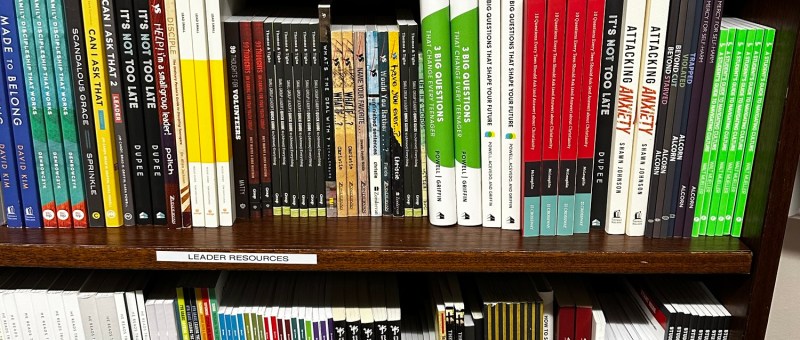
Typically when we hear “space” we tend to envision a specific room for leaders similar to a lounge. While that may be an option for some churches, for other ministries it isn’t. But that doesn’t mean you can’t have a space for leaders. Consider turning your office into a space for leaders by adding coffee and snacks and a place for them to get their needed resources. Our space used to be a filing cabinet drawer with snacks and a coffee area before we opened our leader hub.

If you don’t have an office, think about setting up a table with leader resources and leader-only snacks. You could explain what that is to students to help elevate and recognize your leaders while you set parameters. Your space doesn’t have to be large and over the top, it simply has to be a place that shows your leaders they are loved and cared for. Having a space set up just for leaders helps to value and appreciate them for all they do.

Name the space.

While naming the space may sound like something that doesn’t really matter, I believe it does. It not only validates what you’re doing, it also highlights the importance and necessity of having quality leaders. We chose to call our space the “Leader Hub” because of what it offers. It has a place to pause and rest along with snacks and various refreshments, and we also have resources for our leaders. We want to highlight that our space is more than just a place to relax. It is also a place of equipping and resourcing. Whatever you desire you space to be, name it so that it reflects that to your team.

What should you include?

For our space we include snacks, drinks, resources, programming items, announcements, and anything else our leaders may need. Some snacks that we have are granola and protein bars, microwaveable soups, instant oatmeal, snack packs of pretzels and cookies, pop tarts, and peanut butter crackers. Most of these items or comparable ones you can find at any supermarket including Aldi, where their store brand items are just as good or better than the name-brand items.

Outside of food, we include our small group questions, any announcements for our leaders, and a schedule. We also have a QR Code for our guest students on postcards that they can utilize for their small groups. Their lanyards with name tags are hanging up in the hub for them to grab as they pick up a cup of coffee or a snack. Finally, the hub features first aid items, Bibles and devotional guides for students, and books and resources for our leaders. All of these are items we’ve accumulated over time but have now placed in a centralized area where they are labeled and organized for leaders to easily grab as needed.

How to budget for a leader space.

Some ministries have a budget for things like this while others don’t. I want to speak specifically to the ministry leaders who don’t have a budget for this because it’s often in those moments when you read something like this that you feel you can’t bless your leaders in the ways others do. Let me first say this: don’t think less of yourself or that you aren’t a good leader because of that. The very nature that you’re reading this and trying to think creatively about how to do this validates how great of a leader you are. But the question still remains: how do you budget for this and care well for your leaders?

If you don’t have this built into your budget, or don’t have a budget, consider what you have at your disposal. Can you print out name tags for your leaders and make them stand out in how you theme them? Can you utilize a space where you meet and theme it or decorate for your leaders to help emphasize their value and worth?

Consider asking parents or elders and their families to donate funds or baked goods or a meal for your volunteers. This will help your leaders feel valued and seen by the church as a whole. If you’re able to purchase different items for your leaders, look to extend that budget by shopping at stores like Aldi or Grocery Outlet where your funds go further. Or you could even look to bake treats for them each each as well. Buying off-brands or even purchasing items for simple chocolate chip cookies can be easy on your budget but also show your leaders how much you love them. Don’t be afraid to think outside the box.

At the end of the day it isn’t about how big your budget is or how amazing your space is for leaders. It’s all about caring well for your leaders and showing them that you see their value and worth. Think creatively about what you can offer them and how you can create a space where you love, bless, and equip them.