Help! I Don’t Know How to Lead Students

Sometimes in church life we may find ourselves in a role we never dreamed we’d fill. There may be no one else available, or we may feel God pulling us into a space outside our comfort zone. And sometimes, that may be serving in student ministry.

If this is you, or someone you know, let us encourage you/them. Students are amazing and, in our possibly biased opinion, one of the best groups in the church. While working with them may feel overwhelming, we want to encourage you that if you have a heart for students, you can do it.

The reality is that students crave genuine relationships and connection with others. You don’t need to be the cool leader, you just need to be the leader that genuinely cares, shows up, and listens. The best thing you can do is invest consistently in your students by being present, hearing and seeing them, and fostering a safe place for them to be themselves.

So what are some ways you can do this? Take a look at these tips we hope will get you started and help as you continue in this important ministry.

1. Commit to being present.

This doesn’t just mean showing up to every student ministry event, while that is extremely important. Students do need to see you physically present. It also means being mentally present with your students.

You can be mentally present by putting work and life stressors on the back burner and trying not to bring them with you to youth group. You can also make sure to spend your time with the students, not hanging out with other leaders or playing on your phone.

One of the best ways you can show students how important they are is by giving them your undivided attention when you are with them.

2. Actively listen to your students.

Listening is another way to be present. And while we are to guide and shepherd our students, the first thing they need to learn about us is that we are listening to them. This is how we show them that we genuinely care.

Practice active listening by seeking to understand what your students are saying and why, and by asking thoughtful follow-up questions that continue to foster the conversation. Don’t worry about handing out advice and instruction right away, and don’t listen just to give a response. Show students you are someone who will hear them and wants to know what they have to say.

3. Be yourself and don’t fake it.

Students can spot a fake a mile away, they’re naturally good at it. So do yourself a favor and don’t pretend to be something you’re not. Bring your authentic self to youth group and let that person shine.

The reality is not every single student will click with you, and that’s okay. You’re not there to be everyone’s best friend. But students should be able to see and know the real you, that is one of the best ways you can show them that they matter to you. Give students the respect they deserve by being real with them.

4. Have fun.

If you haven’t been around student ministry before, one thing you need to know about students is that they love to have fun. Whether it’s playing 9 Square, hanging out with their friends, playing sports or music at school, getting crafty and creative, or whatever else they enjoy, students are always up for having a good time.

Since your students like to have fun (and because we serve a God who created a world for us to enjoy), we can also have fun with them. It doesn’t mean you have to do all the things, but you can engage and have fun with them. Laugh, enjoy your time with them, play as you are able, and celebrate with them.

Having fun shows your students that you’re relatable, willing to meet them where they are at, and someone who desires to share life with them. And it can show them that you don’t take yourself too seriously.

If you want to dig a little deeper into leading students, we invite you to check out more of our blog posts! Here are a few to get you started:

Leading Students Well in Chaotic Times

Quick Tip: Giving Students Ownership

Leading Small Groups: Self-Guided Discussion

8 Keys to Building a Successful Student Ministry

Are You Asking the Right Questions?

Trip Tricks: Carabiners

Trips are an amazing part of student ministry because they allow our students to connect with God and one another in intentional and transformative ways. If you’ve been serving in student ministry for any length of time, you are well aware of how important trips are and how much our students love them.

The thing with trips though is that we need to be intentional with them to afford our students the best possible experience that ultimately helps them grow in their relationship with Jesus.

The purpose of this new series, “Trip Tricks,” is to share specific ways we have learned to do this over the years. These are not a one-size-fits-all approach, but instead suggestions that can be molded and shaped to fit your program and student demographic.

When I started working at my current church I inherited a variety of things. Some I kept and others I didn’t. One of the things I kept, and am forever grateful for, are carabiners.

Now you may be wondering, “why on earth do you need carabiners for student ministry?” And no, I am not taking my students rock climbing, although that does sound like fun.

Carabiners are our way of engaging in intentional community and encouragement on trips. They provide students and leaders alike an opportunity to get to know new people and build authentic, biblical community as they grow together.

Allow me to explain. Carabiners are simply the tool we use, and you can utilize any other item for this. We take a bunch of small carabiners and a special memento that we clip to it that has one of the individual trip member’s names on it.

We purchased wooden keychains that have our student ministry logo on it and on the backside we created a sticker via Canva with each person’s name, trip, and year on it. We printed that off on sticker sheets and all of a sudden we have a keepsake for each person.

We then connect each keychain to the carabiner and attach all the carabiners to a holder. The next step is setting the stage.

On the first day or night of the trip we explain very simply what the carabiners are by saying something like this: “Each of you has a carabiner with your name on it that you will be able to take home at the end of the trip. During the trip, you will be getting someone else’s carabiner and your job is to get to know them because we will take time each day (or however often you want to do it) to encourage one another in our group.”

This is a little stretching for some people because it may mean meeting new people or getting stretched outside of their comfort zone. But affording your team an opportunity to build intentional and authentic relationships by encouraging and caring for one another will help your team flourish.

Here is how you can start your share time: have everyone sit in a circle and simply ask for a volunteer, pick someone, or lead by example. Each person will say who they have and then speak words of encouragement and affirmation into their life. Then they hook their carabiner onto the holder and pass it to the person they just encouraged. This continues until everyone has gone.

Now if it doesn’t go in a perfect circle and someone gets called on who already went, we allow them to choose who goes next. Once everyone has shared, you can hand out the carabiners again but make sure everyone gets a new name that isn’t their own.

Typically on a weeklong trip we try to do carabiner sharing at least five times. But that is how our group does it and it is subjective to the group and trip dynamic.

I’ll be honest, the first few times your group does this may feel a little awkward or indifferent. But the more you embrace it and lead by example, the more impactful this time will become. You will begin to see a culture and relational shift among your team as they begin to engage in Christ-centered ways.

The whole point of carabiners is to draw your team closer as they embrace the authentic type of relationships that God desires for us. As they begin to understand what true, authentic, biblical community is about, your team will draw closer together and crave more of what God desires for us.

Fun Game Ideas for Student Ministry

If you’re like me, games may not be your primary focus each week. I am not saying games are bad; I think they are a necessary and important part of student ministry.

But if I’m being honest, I don’t always think about them because I am not always wanting to lead games. I’d prefer to engage in conversations and just float around while interacting with students.

But, since I know how important games are, I wanted to share some ideas with you that are fun, easy to run, and do not take up a ton of prep time.

The Floor is Lava

This is an old school game that has been having a recent resurgence. If you aren’t familiar with the rules, the game is fairly simple: do not touch the ground or you are out.

The object of the game can vary from completing tasks like collecting objects or moving a team to a safe zone, to completing an obstacle course, to a last person standing challenge. The game can be as creative as you can imagine and will allow various people to play.

Seated Basketball/Soccer/Football

This is a personal favorite of mine. These games take the traditional sports we love and turn them on their heads. You do not have to be super athletic to play these games because you are seated the entire time.

Before you start the game, set up your playing area whether it is indoors or outdoors. Simply place chairs where players will sit the entire game or period and label which team they are for. Then have your students pick a chair and get ready to laugh.

The rules are the same for whatever the game is with one addition: students cannot move from their chair. Have leaders roaming to place the balls back in play when needed. You can also change up the rules and objectives to add another layer to the games.

Hula Hoop Volleyball

This is an easy game to set up and run with. Simply set up a volleyball net, or something in place of it like a sheet on a clothesline, and then place hula hoops on each side that are six feet apart. The rules for volleyball don’t change, except that students may not leave their hula hoop during the game unless it is to rotate spots during a change in servers.

Scattergories

This is a great game to play as a small or large group. You can do a quick Google search for categories and then run the game during youth group. You can simply click through the Google images to get ideas or check out a website like this one.

If you are playing as a small group give everyone a score sheet and have them all compete against one another. You or a leader will assign a letter and have the students write words beginning with it.

If you have a larger group, consider setting this up tournament style. Have students all compete with same letter and then when time is up they will compete only against the other person at their table. The winner will advance to the next table, while the loser stays at the table. If there is a tie have them play Rock, Paper, Scissors to decide the victor. The person with the most wins at the end is the champion.

Cornhole/Bags Tournament

If you do not have a couple sets of these for your youth ministry, let me highly encourage you to get some. I have purchased these before and they have held up very nicely.

You can turn it into a tournament to decide who is the best cornhole player. You can also set up varying degrees of game play (i.e. closer or farther away) to make it more of a challenge for your students.

Charades

Who doesn’t love a classic game of charades? The general idea is that you will have someone acting out an action, character, or activity that they have pulled from a hat. These can be pre-made by you and your volunteers or you can have students submit them.

There are lots of different ways to play Charades like as small groups guessing, or as a large group guessing, or even reverse charades where one person guesses while the whole group acts it out. Whichever one you choose, make sure to remind the people acting out that they can not make noise or they forfeit that round.

Head, Shoulders, Knees, Cup

Have you ever played head and shoulders before? You know the one with the classic song? It’s an easy game because you simply need an emcee up front who calls out what everyone needs to do. If they say head, everyone touches their heads. If they shout knees, then everyone touches their knees. In this version two people are facing each other with a cup on the ground in between them. The object of the game if simple: follow the directions and then when the emcee yells “cup,” both players try to grab the cup. The one who doesn’t get the cup is eliminated and the winner finds a new partner to compete with. Bonus tip: make sure there is enough distance between the players so they don’t bump heads when going for the cup.

Pull Up

All you need is a sound system and music, and someone who can start and stop the audio when needed. Have your group sit on the floor in a circle facing inward. Then choose an odd number of boys and girls to be in the middle. When the music starts the students in the middle must go to a member of the opposite gender, extend a hand, and “pull them up”. They then sit in the open spot and that new student in the middle continues by pulling up a member of the opposite gender. This continues until the music stops and the gender with the most people in the middle loses. Play for as long or short as you would like.

Drip, Drip, Drop

For this game you need just a little bit of prep: paper cups and water, and some towels if playing inside. I’d encourage you to play outside so you don’t have wet carpets. Have your students sit in a circle facing each other much like Duck, Duck, Goose. Pick on player to be it. They stand outside of the circle and are given a cup with a small hole in the bottom. Have them place their finger over the hole. When they start they go around the circle saying “drip” and dripping a small amount of water on the students’ heads. When they yell “drop” they turn the cup upside down on the person and have to run around the circle while being chased by the person they dropped on. If they make it to said person’s spot they are safe. If they are tagged they are it again.

Egg, Chicken, Dinosaur

This is a great alternative to Rock, Paper, Scissors and is really easy to pull off. Explain how to play Rock, Paper, Scissors to the group. Then explain that in this game you can only play with people who are the same as you: i.e. an egg, chicken, or dinosaur. Eggs can only play eggs, chickens can only play against chickens, and dinosaurs against a dinosaur. The kicker is they must walk or waddle in a manner that is befitting of an egg, chicken, or dinosaur. Participants all start as eggs. They must find another egg and play a best 2 out of 3 round of rock, paper, scissors, and if they win they become a chicken. When a chicken wins they become a dinosaur. If they lose a round they go back one level.

Lightsaber Duels

Participants must place one hand behind their back. They will then join in a battle with another person by locking their one hand with the other person’s hand. Students will then extend their pointer finger as their lightsaber. When the music starts they attempt to touch their “lightsaber” to the other person. They can “zap” them anywhere but they cannot bend their finger to complete a touch. If they are zapped they are out. The winner keeps advancing until only one remains.

Bucketball

This game requires some prep and a few quick items. Make sure you have buckets, cones, pinnies/colored shirts, and balls on hand before you play this game. For set up, place a bucket in the middle of a ring of cones for each team where one player (the scorer) will hold the bucket (approximately three feet in each direction from bucket to cone).

Divide your students into groups (we usually just do two but having more groups makes it interesting) and assign each group colored pinnies. The game is played in the same manner as ultimate Frisbee where the students must pass the ball down the field and are only allowed three steps with the ball. Points are scored by players throwing the ball (after three or more passes) to their scorer. The scorer will hold the bucket within the ring of cones and attempt to catch a ball in the bucket. Only balls that stay in the bucket count. The scorer may not go outside of the cone ring and the defense and offense may not go inside the cone ring. Feel free to add as many balls to the game as you would like.

Seated Basketball/Soccer

For this game you need a few items: chair, pinnies, balls, and extra leaders or students to collect stray balls. This game is played just like soccer or basketball in that the goals are the same which means you obtain points how you would normally (i.e. kicking a goal, making a basket). Divide your students into two teams and give them their pinnies. If you are playing soccer have the students remove their shoes to prevent potential injuries from kicking one another.

Have your students then grab a chair and give them 15-30 seconds to place their chair. Explain that this is the only place they may sit for the first half/quarter. Once they sit they may not move from that spot. When everyone has sat down introduce the balls for the game and explain that students must remain seated all the time, and failure to do so will put them in a penalty box. Explain that if no one can reach a ball it will be placed back into play by a leader. Assign times for your halves/quarters and then when a new one begins allow students to find a new spot to sit.

Cat and Mouse Tag

Have students pair up and link arms at the elbows. I would recommend not allowing them to hold hands or wrists as it can lead to injuries. Pick two students to start the game. Explain that one will be the cat who is it and will chase the other student who is the mouse. At any point during the chase the mouse can link up via their arm with a group and the person who is now on the outside is the new mouse. If the mouse is tagged then the roles are flipped and they are now the cat, and the cat is the mouse.

Death Sticks

Take some pool noodles and cut them in half and have your students each grab a chair. Place an odd number of pool noodles on an equal number of chairs in the middle of a large circle of chairs that your students make. Have each student sit in their chair. Then chose an odd number of students to stand in the middle that is equal to the number of chairs with noodles. Explain that this is a guy versus girl game (or however you would like it to be) where when the music starts the guys must take the noodle and bop a lady on her legs, and ladies must do the same to guys.

Once someone is bopped the person with the noodle must return the noodle to the chair they took it from (no throwing it must be placed) while being chased by the person they bopped. If the person who was bopped manages to retrieve the noodle when it placed down and bop the person who bopped them before they sit down in the vacant chair that person returns to the middle. If they cannot they are now in the middle and can bop someone. Winning team is the team with the least of their gender in the middle. And remember that a bop is a soft hit, not smacking someone hard with the noodle.


Review: The Bodies Behind the Bus Podcast

Elise and I make a habit out of trying to listen to a wide variety of podcasts. Some are humorous, others are true crime, many are focused on ministry, and still others focus on sharing stories and critiques on ministry, leadership, and toxicity.

The Bodies Behind the Bus podcast focuses on the latter part of the list and truly seeks to help the church and ministry leaders be better at how they love, shepherd, and lead the church.

I do want to pause and address the “why” for a moment. Some of you may be asking, “why would you share a resource that can critique the church harshly and point out its flaws?” I think rather than simply ask that question we need to look at the causation for said question.

The cause is this: the church is made up of broken people and when broken people lead without checks, balances, and accountability, problems can and will arise. This leads to toxic leadership, unchecked authority, and a culture of harsh management and fear. This is the “why.”

When the church is made up of broken people, we must be striving to grow and be more aware to protect ourselves from falling into those categories as well as learning and empathizing with others who have been recipients of those negative behaviors.

With that being said, here is why I recommend this podcast. The hosts alternate between interviewing individuals who share their stories, digging deeper into hot topic issues surrounding churches, leadership, and culture, and dialoging about how the church needs to grow and change.

These episodes are highly informative and helpful to understand how to be a better leader who shepherds and cares for the flock. It also helps congregants and lay people understand what healthy leadership should look like while providing helpful and thoughtful ways to engage with your leadership.

The stories you will hear will pull at your heart as you empathize and sympathize with the story tellers. You will hear stories about churches and leaders you may know and many you do not. But by listening to each episode, you are allowing yourself to be shaped into a better leader by learning first and foremost how not to lead but also by becoming a better listener and shepherd for your people.

So often in the stories shared, people aren’t listened to and are dismissed. By allowing your heart and mind to hear these stories, you’re positioning yourself to be a better listener and leader because you’re seeing people where they are at and growing in your relational and emotional intelligence.

I will say this when it comes to The Bodies Behind the Bus: it may be helpful to take your intake slowly rather than the firehose method. These episodes, especially interviews with survivors, can be heavy and soul crushing. They are raw and can feature strong language, and as you hear the stories, stats, and fallout, your soul will grieve deeply. Because of that, it would be helpful to listen to the podcast in bite sized chunks rather than trying to power through many episodes at once.

You may not agree with everything in this podcast. I don’t expect you to. What I would challenge you to do is listen to it and allow for there to be room for empathy and sympathy in your heart as you hear the stories. Then allow for that to help mold you into the shepherd God has called you to be.

Resourcing Leaders

Elise and I have each been in youth ministry for twenty plus years. That’s crazy when we step back and think about how things have changed during that time. Technology has evolved. How youth groups do things has changed (bye-bye “Fear Factor” challenges). Styles and culture have changed. Students are walking through more difficult things.

Have you seen how things have changed and evolved over the last couple of decades? What about over the past five to ten years? The reality is that our culture and what our students are walking through has changed drastically and will continue to do so. But with that can often comes a feeling of ineptness for ourselves and our volunteers.

If you’re like me you may remember the first time a student came to you about a new issue you hadn’t been taught how to respond to. Maybe it was about eating disorders or disordered eating. Perhaps it was about sex, sexuality, and gender. Maybe it has to do with cutting and self harm. Or was it the time a student talked about the reality of their mental health and how it was affecting them.

Do any of these sound familiar? Have you ever had a student come to you with these issues or any of the litany of others we deal with? Here’s the thing: many of us have had some type of formal training if we are on church staff. Whether it was a single semester class, listening to podcasts, going to conferences, or additional resources at your disposal, you probably have more knowledge than some of your lay people when it comes these issues by nature of your role and responsibilities.

That is not a slight against our volunteers, but instead a challenge for us to be aware of what our people need. Typically, those of us who are leading ministries have more knowledge and awareness of issues or we know what resources to utilize when needed. The majority of our volunteers may not have the same knowledge or background and because of that we bear the responsibility of helping to resource and equip our people.

With that responsibility in mind, we should do all we can to help our people when different issues or circumstances arise. I understand that for many ministry leaders, paying for resources may not be feasible each year or at all. The resources you stock don’t necessarily have to be resources that require you to pay for them.

You could download and print out articles to share. Podcasts are an easy option to resource to your leaders. Websites like The Bible Project have videos, articles, and more for your leaders. Some national ministries may also be willing to send you resources at a discounted rate or for free if you reach out to them about your circumstances.

If you are able to purchase items for your leaders here are some ideas for what you could utilize to resource them.

Study and Journaling Bibles: Having study bibles or journaling bibles for your leaders and students to utilize in small groups, discipleship relationships, or for individual study are great resources.

Bible Study Resources: Equipping your leaders with resources to help students study the Bible is a huge win. This will help your leaders feel prepared and ready to walk with students through God’s Word and help them understand it.

Bible Studies: We love She Reads Truth and He Reads Truth for all of their materials. Their Bible studies are great for students because they don’t speak down to them or try to be hip and cool. Instead they offer topical, whole book, and character Bible studies. While these may seem a little costly you can get digital versions for less and if you subscribe to their emails, you can watch for sales including their clearance sales when books are significantly marked down.

Topical Books: If I have learned anything throughout my years in ministry, it’s never be surprised by the questions you are asked. Whether from students, parents, or leaders, the questions will always be there and they will span a wide swath of issues and circumstances.

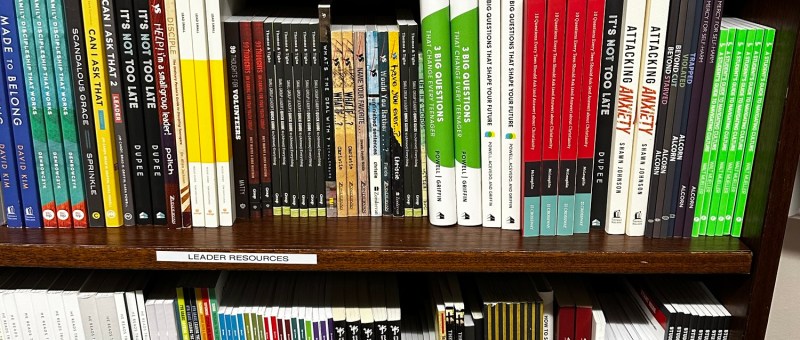
With that in mind, we have curated books on a variety of topics to help people think through and navigate different issues. We have books on mental health issues, books on hot button issues in Christendom, books about identity, books on community, small group leading, and more. Basically if we saw a book that would be helpful, we allocated part of our budget to begin building a library of resources.

Scriptural Citations and Resources: One thing we have started to accrue over time is a running list of Scripture references for a variety of issues. So often students are looking for answers and ask “what does God think about this” or “what does the Bible say about that.” Having a running list of references allows us to resource our leaders and to point them toward what the Bible has to say.

What resources do you make sure to give to your leaders?

Product Review: GoSports Gaga Ball

If your middle school students are anything like ours, they probably love Gaga Ball. Our students could play this for hours and keep coming back for more. Last year we decided to make an investment for our middle school ministry and we purchased a 20 foot GoSports Gaga Ball Pit.

We used to utilize some of our older wooden tables to build an improvised Gaga Pit whenever we hosted outdoor events that brought students in by the droves. We longed for a set that was easier to set up and could be utilized indoors. I searched for hours online trying to figure out what our options were but everything was either too expensive or was a DIY option that required more building skills than I could ever have.

Eventually one of our volunteers built us a semi-portable set out of two-by-fours but it wasn’t meant to last. So we found ourselves back where we started: no real options. And I’ll be frank, I had given up hope of finding something that would work for our ministry setting and within our budget.

That’s when my middle school director came to me with a great option. After searching through Amazon, she had found a viable option: the GoSports Gaga Ball Pit. These come in three different size options (10, 15, and 20 feet) and seemed to have a quick set up and tear down feature.

I was skeptical about this set at first. It seemed too good to be true and way too easy to set up and store. But I figured let’s see what happens, and I am so happy we did. This set is incredibly easy to set up and it has stood up to heavy (weekly) use.

Not only is it easy to set up and durable, GoSports also has great customer service when it comes to obtaining replacement parts. And don’t assume that it broke or isn’t up to the task because we needed replacement parts. One of our pieces got run over and still worked but was slightly off.

The set comes with three different types of pieces that when all put together, form an octagon. You place the poles into each of the openings in the net and put them into the upright stands and there you have it: a ready-to-go Gaga Ball Pit. This even comes with two rubber balls that you can use in your pit.

One thing I will say is be mindful that this pit isn’t like one made out of plastic or wood where the ball will rebound quickly off of the sides. The netting actually cushions the ball and slows it down a little. That means play may not be as fast paced as other sets but it does allow players of all skill levels to have a blast.

At the end of the day, this set is totally worth the investment and we will be recommending it to everyone!

Resource: Gen Alpha Report from One Hope

I always try to stay up to date on how culture is shifting, what students are engaged in, and what future generations are turning to. I am also always on the lookout for free resources; we all know that money is tight in student ministry. So when those two pieces come together, I jump at the opportunity to gain resources, insight, and equipping.

Enter One Hope. I wasn’t super familiar with this ministry until recently, but found out about it through an email blast from one of their ministry partners. They sent out an email with a title asking, “Want to know more about gen alpha for free?”

Of course I had to check it out. And what I found was a great resource that is rooted in research and diligent study of this upcoming generation. One Hope’s mission is “to affect destiny by providing God’s eternal Word to all the children and youth of the world.” With a mission statement like that, and by doing some digging on their website, I knew I had to check out this report.

In order to download the report all you need to do is go to this link and enter just your name and email address. A few moments later check your inbox for the full sixty three page report. This is a great resource that is highly informative and provides insight into not just the habits and rhythms of Generation Alpha, but also insight into how they engage with media, families, and faith.

I’ll be honest, there was information that I found to be very helpful as we lead and care for the upcoming generations. As we seek to reach students where they are at, it is helpful to know how they are viewing their lives, relationships, and faith because it allows us to help shepherd and disciple them and their families. This report provides us with a wealth of knowledge and ways to practically engage with our students.

You may not agree with all the findings, or perhaps you haven’t yet seen some of these perspectives pop up in your ministry just yet. But knowledge and insight are powerful tools that allow us to grow and pour into our students in effective and beneficial ways. My encouragement would be to download and read the report and think critically about how we can care well for Generation Alpha as we continue to point them to Jesus.

Resource: FYI Report on Youth Leader Burnout & Wellbeing

I love getting resources whether they are digital or physical. I’m the guy who is always signing up to get newsletters, promotional materials, and always looking for a free t-shirt or hat. But aside from the random freebies and additions to my closet, I’m also on the lookout for resources that help me grow as a youth pastor, an individual, and as a disciple of Jesus.

One of the resources I recently obtained had to do with the holistic health of student pastors, put out by the Fuller Youth Institute. Back in the days of the Youth Specialities annual conference, I signed up to receive their emails and digital resources, and I can honestly say I’ve never been disappointed with what they send.

This last week I had an email from FYI pop into my inbox with this title: “🚨 ALERT: High burnout month ahead!” I’ll be honest, the title immediately grabbed my attention and upon reading it I saw that it contained an amazing free resource. The “FYI Report on Youth Leader Burnout & Wellbeing” is available as a free download at this link. You will need to enter your name and email info, but I can promise you that it is totally worth it.

Right on the sign up page for the free download, Fuller Youth Institute gives you a brief preview of what’s in their report. It includes “the latest research on the experiences of today’s youth leaders, firsthand insight and stories, tips for developing strategies, and practical recommendations.” What I can tell you is if you thought that sounds good, the report is a hundred times better.

Fuller’s report is constructed in an easy-to-read way, filled with stats and solid research, punctuated by real life experiences from many different youth leaders, investigative in its approach, and encouraging and challenging in its challenge to youth leaders, churches, and church staff. At the end of the day this report is encouraging because while it focuses on the realities of burnout amongst youth workers, it doesn’t claim that as the end result.

Instead, it highlights how we can overcome and avoid that result so we can thrive in our roles. The encouragement to pastors and church leaders is also beneficial as it provides them with thoughtful and practical ways to come alongside youth workers as they walk with them and encourage them.

All in all, this is an amazing resource to read through and be aware of. The end game may still be a struggle, especially if you don’t have support in your role. But this report helps you to see you aren’t alone and provides solid responses to help you thrive in your position.

It also equips you with resources to highlight the necessity of partnership within the church that may help others come alongside of you. I just wouldn’t recommend passive aggressively placing this in your senior pastor’s mailbox. Instead, consider sharing it with them over coffee or lunch, or doing the same with an elder or two. The more relationally intentional you are in sharing this with leadership, the greater the potential they will listen and respond.

So what are you waiting for? Go download this report now!

Quick Tip: Preparing Your Budget

Depending how your church’s fiscal calendar works, you may be in the early stages of preparing your budget for the next year. Our church just walked through preliminary budget conversations with each ministry and this year we had to start from scratch and account for each budget line.

This may sound tedious and scary, but our team has done well at tracking our budget and accounting for all of our expenses over the past few years so building from the ground up was not as difficult as it may seem. But when we heard that we had to account for everything and substantiate why it was needed for the ministry, it caused us to pause and wonder if budgets were going to be cut.

Typically budget meetings, especially for youth ministries, can be scary because we wonder if leadership will understand why we need to buy dozens of pool noodles, seemingly unlimited boxes of Cheetos, and hundreds of water balloons. But we promise, these are all absolutely necessary.

Kidding aside, these moments can feel super scary because there is a reason and rationale for why we ask for our budget, and we worry that if it’s cut our students and families will feel the fallout and affects. So how do we try to keep that from happening? Is there a way we can still maintain our budgets and find a way to help leadership see the necessity of what we are asking?

Well, today I want to share a couple quick tips that I have utilized when preparing a budget submission or conversation.

First, know why you’re asking for what your budget reflects.

Sometimes you’ll get asked questions about why certain line items are there or why exactly you’re requesting a certain amount for a budget line. Knowing your answers and being able to confidently share your reasoning will help to explain your budget and your rationale.

Second, aim high and shoot low.

My encouragement is to go into these meetings with a budget that you would dream of having. Don’t go in being greedy, but go in asking for what you’d dream of having for student ministries. In the same moment, go in with a realistic expectation as well. You may not be able to purchase three 9 Square sets, but you may be able to get one. That’s an example of aiming high, but knowing that the realities may be different.

Third, be a good steward of your current and next budget.

Part of being a leader in a ministry is practicing good stewardship. We need to appropriately manage the funds that God has provided us with through His church, and that means we need to steward our current and future budgets well.

We shouldn’t spend frivolously or haphazardly, but instead should honor our budget and let that be reflected in how we spend it. This may mean that questions or statements may come like, “You did okay with less last year,” but this is where we can explain why we are asking for something different this year.

Lastly, focus on what matters.

I am not saying to simply focus on what matters when you create your budget but also if your budget isn’t approved for what you wanted. When you build your budget for your ministry always do so with your vision and the Gospel in mind as you seek to love and care for your students and families. And should your budget not get approved or be altered, remember that budgets aren’t ultimate. Yes, they allow for us to do things and to scale the ministry, but they don’t allow us or keep us from fulfilling the calling God has placed on our lives.

Seek to work within the context and budget that has been stewarded to you and as you do that, remember that everything you have is a gift from God to you. With this frame of reference, our perspective and understanding of utilizing our budget is shaped differently and helps us to seek to honor God in all aspects of our careers.