
Quick Tip: Be Willing to Ask for Help

When it comes to asking for help, how would you rate yourself ? Are you really good at it? Are you someone who just goes at it alone and gets it done no matter the cost to you? Or do you ask others to jump in and help?

Asking for help is not something I’m naturally good at doing. I was raised with the mentality that you do everything on your own because you’re the only person you can rely on. We were the “pick yourself up by your bootstraps” type of family.

Now I could go on about how that’s a flawed type of system and how that very phrase is antithetical to what it means to be a Christ follower, but I won’t. Instead I want to encourage you to be willing to ask for help.

One of my favorite things we get to do in our ministry is host a Christmas party for our leaders. For years I took that responsibility upon myself to plan, decorate, and execute. I would spend countless hours and days and weeks preparing everything.

I’d handle decor, I’d build the schedule, prepare the gifts, purchase and provide the food, handle the emceeing, and of course I’d be the one cleaning up. Did you feel tired just reading that? Did it hit home for you?

When a ministry or job or an event hangs upon one person that’s a problem. What if that one person gets sick? Worse, what if they quit? This builds a culture of personality around a person, not an identity in Christ and that isn’t what we are meant to be doing.

Instead, we should seek help. We should bring others into the process, share the load, empower our people, and remind ourselves that the ministry doesn’t rest upon us but upon Christ.

Shortly after 2020-2021, we had to rethink how we hosted and ran our leader Christmas party. I knew I could no longer run it on my own and had to come to terms with letting go and allowing others to help.

A couple of parents had offered at different points to help, so I figured sending out a request for help would be a good first step. I wrote an email explaining what we had seen God doing over the last year in student ministry, all the ways our leaders had been serving, and outlined the needs and requests.

Our ask of parents was simple: would they provide desserts and appetizers for our leader Christmas party as way to encourage and bless our leaders? I was skeptical the first year we sent this out, but I was pleasantly surprised with the results. We didn’t just have food for the party, but leftovers we sent home with our leader. Even more leftovers were repurposed for our student party the next week.

We have continued to utilize this approach with our families each year, and every year they bless our leaders in abundance. In doing so it alleviates a huge need for that event and allows our team to better engage with our leaders.

It also shows our leaders that our families do see and appreciate them by providing very real and tangible gifts for them. Many families even send cards and notes along that we share with our leaders.

So at the end of the day it isn’t just about asking for food. It is understanding that by asking for help, we can alleviate the pressure we often feel as ministry leaders, bless others by asking for help, and allow other people to have ownership.

Asking for help can at times be difficult, but it is necessary for the longevity of yourself, your ministry, and the church. Bring others in, allow people to utilize their skills and gifts, and build the church and your ministry around Christ. If you do this you will see yourself, your ministry, and your church grow for the better.

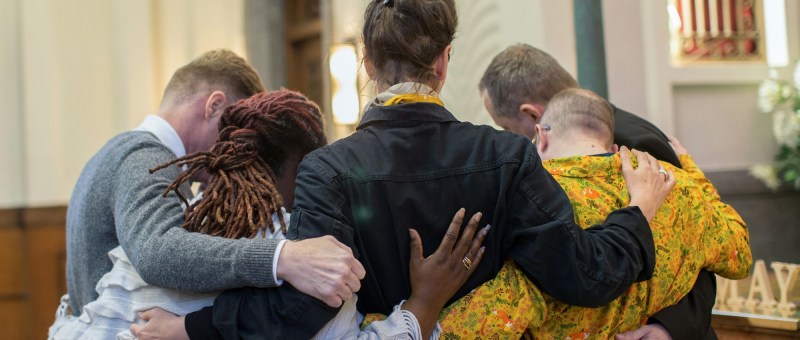
Quick Tip: Caring for Leaders

Have you ever had a leader experience loss? How did you respond? Has a leader on your team ever had a surgery or prolonged illness? Was there a celebratory moment like a college or graduate school graduation? Has there been a birth or adoption within your community?

When it comes to caring for our people, we need to practice intentional community and support for them. Often we can default to monetary care, and while that can be a part of caring well, we can and should be thinking about different opportunities to love and support our community. But what are some additional ways to care well during difficult or celebratory moments?

  1. Send a personal handwritten note or card.
  2. Pray with and for the individual.
  3. Visit with them and make sure you have allotted the appropriate amount of time to visit.
  4. Send flowers and/or balloons.
  5. Send a gift card to your local supermarket or DoorDash to help provide meals.
  6. Start a meal train and bring a meal by yourself.
  7. Encourage your youth group to write cards to the individual.
  8. Put together a gift basket with contributions from your leaders and/or youth group.
  9. Help out with any service projects around the home and encourage your students to help with these.
  10. Check in and see if they need help with childcare or pet sitting.
  11. Ask families to contribute to any of the above ideas.

These aren’t meant to be a catch all, but instead to challenge us to think creatively when it comes to caring well for our people. We want them to know they are seen, loved, and missed and these are just some options that help us to think outside of our normal ways of doing things.

Comforting Those Who Grieve

History was made this last Tuesday with the presidential election. No matter which side you fall on, or if you’re one of the millions who didn’t fit neatly in any bracket, we have to admit there were countless firsts throughout the entirety of the election. At the end of the day, someone and multiple other people lost. That’s the reality of an election.

But this one, well, this one just felt different. For the winners they feel vindicated and as if the skewed power dynamic has been righted. For those who lost, they feel scared, betrayed, and worried for the future. It’s often in moments like these that the winners take a victory lap (typically on social media) and the losers share their fears and apprehensions (also on social media).

In years past, these moments of sharing have lead to horrific conversations, falling out among friends and families, people leaving the church, and much more pain and heartache. As I sat thinking through the events of this past week I must be honest and say my first thoughts were frustration and questions. But then my heart began to break because I feared what may cause my friends who are hurting to walk away from the church and Jesus. In an election cycle that wasn’t simply political and partisan, and instead leaned heavily into the church world we call home, it is hard to not see the pain and hurt that happens here in those spaces.

As Christians we have a biblical mandate to walk with those who are grieving and to not take a victory lap (pride goes before the fall). I’m not saying don’t celebrate, but instead think of others first. Be willing to see them as Jesus does and to stand in the gap with and for them. This isn’t something we should do only after the election–though I must admit that the results have been the catalyst for this post–but something we as the church should be known for in all moments! We have a calling, an obligation, and a command to walk with, care for, and love our hurting brothers and sisters. The question is how do we do that well? Today I hope to share just a few ways we can offer comfort to those who are grieving in any circumstance.

Listen first.

This is key to caring for others and often something that people struggle with doing. We are quick to offer suggestions, to look toward fixing things, or to try to solve the problem. But when we do that we don’t listen well, and if we don’t listen well, we don’t know how to care because we won’t truly understand. So make sure to simply listen and by listening look to care well.

Seek to understand.

This goes hand-in-hand with listening first. When you listen well you can understand what is happening. It’s often in moments of grief, pain, and loss that people will articulate how they are feeling and perhaps their view of God. They may not be theologically correct, but in moments of pain they are simply grappling with their emotional hurt and thoughts. So instead of looking to correct or offer the proper perspective, look to understand and see what they are feeling. When you listen and understand then you obtain the permission relationally to offer insight and perspective.

Engage in empathy and sympathy.

Our ability to show that we are with and for someone who is grieving is paramount to helping them process and heal. That means we need to show empathy and sympathy in those moments. Hurting with them. Understanding their pain. Relating with their feelings. For some this is easy but for others it’s difficult or uncomfortable, and much of this rests on our personalities. But regardless of where we fall individually, we must be willing to engage with these feelings.

When you can sympathize and show empathy, you’re helping to validate the hurting individual, showing you care and understand, and highlighting that you are a safe person. Think through what you say and don’t say, consider your body language, and understand how facial expressions play a role in these moments. When you consider those aspects you will find yourself engaging in more proactive and beneficial ways.

A word of caution though: don’t fake it and don’t pretend to understand when you don’t. Be honest in what you say and thoughtful in how you say it (i.e. you may not understand how they feel but you can say, “This grieves my heart and I am hurting for and with you.”)

Point toward hope.

Now I know what you’re thinking: of course we point them toward hope, it’s kind of our job! And yes, I hear you. We want to point people toward hope, but let me challenge you to be thoughtful and intentional in how you do this. There’s a reason I didn’t list this point first and it’s because we often jump into moments of grief with good intentions that often fall flat.

When someone is grieving the loss of a family member we might throw out 1 Thessalonians 4:13-18. When someone is wrestling with whether God cares, we throw out passages about Him caring for children or a poem about footprints. When people are wrestling with depression or anxiety and are grieving because they think God doesn’t see them, we hand them a passage about burdens being lightened. And yes, all these passages are true, and maybe taken a little out of context at times, but let me ask you something: is that what they need to hear right at that moment?

We serve a big God! A God who can handle our doubts, fears, questions, and even anger because He is God. And one of the best things you can do is allow people to express their tensions and then at the right moment to point them to the hope we have in Christ. This may not be right away, and that’s okay, but it must be a part of what we do in comforting them.

Walk with them.

This is one of the best things you can do when people are grieving. Stick with them. Check in on them. Follow up. When you do this, you are engaging in intentional, relational discipleship and you are showing that person they matter to you and to God.

This isn’t easy. Believe me on this. Depending on what people are walking through, how they are processing, and the depth of hurt, this can be a long and difficult road at times. But we are called to care for one another. To stand in the gap for those who need it. And to be the embodiment of Christ to this hurting world. When we walk with and stand for those who are grieving, we are living out the mission of Jesus.

Quick Tip: Appreciating Others

So October is Pastor Appreciation Month. Did you know that? Or did you forget like me? That may be one of the reasons this post is dropping in late October and not earlier.

Now you may have read that and thought to yourself, “Nick, this post seems a little self-serving since you’re a pastor and you’re talking about appreciating people in the month of October.” I hear you on that, but please understand that isn’t the heart of this post. In fact, the point of this Quick Tip is to help us think about appreciating people we work with–our bosses, and our volunteers.

When we appreciate one another well, we are showing people that they are loved, valued, and seen. In ministry circles this is vitally important because there is so much that is given beyond the contexts and demands of a non-ministry job. You don’t really stop working. The calls, texts, and emails are always coming through. People show up at your home unannounced. The weight of what people are dealing with weighs on your shoulders and your family’s as well. The burnout rate for pastors and church staff is astronomically high. And let’s not forget that church staff often aren’t paid well and volunteers aren’t paid at all.

Phew. That’s a lot and we haven’t even hit all the pieces and realities of ministry yet. But when we feel that weight, think about the other people in your life who also feel that. Your volunteers, your staff, your supervisors, your wife, your kids. We may not always get appreciated, but we can appreciate others. Rather than say, “Nobody did anything for me in October,” what if we were the catalyst for change and it started by appreciating others first?

Today, I want to share some ways you can appreciate others and love them well all year long as we seek to care well for each other. Some are practical ways to do this and others are simply suggestions on what to think through.

Think about what you’d appreciate and use that as a metric for caring well.

Sometimes it feels like we just don’t know what to do or what to get for someone else. If you’ve ever struggled around Christmas or birthdays trying to get a gift or card for someone, you know exactly what I’m talking about. In those moments, pause and consider what would make you feel loved, valued, and appreciated.

It doesn’t have to be super specific, but if quality time is what you enjoy, consider taking the individual out for a cup of coffee and listen well. If you enjoy a good book, maybe get one for them (don’t be passive aggressive in choosing the book). If it’s something handmade, think about what you could make them. Using this as a metric will help you practically think through what you can do to appreciate others.

Don’t forget the families.

The reality of working in ministry is that it is often difficult. There are hard times that can wear on ministry leaders. But often, the unseen tragedy is how deeply this affects their families. Spouses carry that weight as they walk with their significant other and try to help them. Children often lose out on time with their parent(s) because the church pulls their parent away.

Ministry leaders can come home exhausted and quality time with their family takes a hit. Families often are all-in at churches and serve in a variety of ways, and never hear “thank you.” In moments like these, it is important to remember them and care well for them. Don’t forget the families. Love them and help them to know they are seen.

Utilize a handwritten note or card.

Sometimes finances are tight, we are in ministry after all. And we may think, “I have nothing to give. What can I do?” The power of a thoughtful handwritten card is undeniable. Think about the last time you got a letter in the mail. How did you feel? It’s exciting, it’s encouraging, it’s life-giving. Taking the time to write a note and encourage someone is extremely powerful and special.

Instead of a gift card, take them out and engage with them.

If you’re financially able, a great way to appreciate someone is not just giving them a gift card but taking them out for a meal or cup of coffee. This shows intentionality and a desire to know that individual. In those moments, we need to remember that the priority is listening to and engaging with the other person. Don’t dominate the conversation and listen well. Take this as a time to grow in your knowledge and relationship with that individual as you care well for them.

Give a personalized gift.

Are you the next contestant on Holiday Baking Championship? Are you crafty and good at creating things? Still got your sourdough starter going? Are you a gifted writer or artist? Sometimes the best gift is one you personalize because you put time and effort into making it for someone. I love to bake and make candles, and I see the joy and happiness those things bring when I share them with others. So think about your skills and hobbies, and ask yourself how you can turn those things into gifts to bless others.

Quick Tip: Having Personal Boundaries

Have you ever been interrupted on your day off with something from work? Do you answer phone calls at all times or do you keep boundaries? Do you struggle to figure out what takes priority when you aren’t in-office: family or work concerns?

Please don’t hear me as being critical because I’m not. I get it. For many years I didn’t have healthy work-life boundaries. I tried to convince myself that I did but it took a mental health leave of absence to realize that I didn’t. I used to check emails and respond to them on vacation. I was always checking social media. If texts came through, I’d respond.

It was all-consuming even when I had convinced myself it wasn’t. And for those who serve in ministry, we will often struggle with finding a healthy balance. We know our calling and we care for our people, but that cannot be our only focus nor should it be. Today, I want to share a few quick ways to have healthy boundaries.

Remember the order of your priorities.

You are called first to focus on your relationship with God and your holistic health, then to focus on your family, and then focus on your ministry. When these priorities are out of order you will find yourself out of sorts as well. And when these are left in an out-of-order scope and sequence, you will find yourself fully depending on you, not on God, and your boundaries being stretched further and further.

Utilize “do not disturb” and turn off notifications on your devices.

Removing the interruption of electronics is one of the best things you can implement to help incorporate healthy boundaries. This doesn’t mean you’ll never respond, but it does remove the tension, anxiety, and pressure that comes with always being connected. When you utilize these features, you can be fully present in the moment and with those who matter most.

Take work apps off your phone.

This may be easier said than done for some because it may be a requirement. Technically a job cannot force you to have apps on your phone unless they are paying for said phone, but enough about technicalities. My point here is this: if the apps are keeping you focused on work and pulling you away from intentional moments with those closest to you or keeping you from truly resting and taking a sabbath, that is a problem. Instead, take them off of your phone or at the very least turn off the notifications. And yes, that goes for your work email too.

Screen calls and texts.

No matter what, there will be times you get calls and texts, even on your day off. But not every call or text necessitates an instantaneous response. Instead use wisdom and discernment to diagnose which calls or texts warrant a response, and decide how quick those responses should be.

Talk about and make your boundaries clear.

This is something I wish pastors and ministry leaders did more often. We must regularly and openly talk about our boundaries. If we are calling people into a holistic life-changing relationship with Jesus, we should be modeling that not just in action but also in our speech. We need to talk about how we are creating margin and looking to refresh and take sabbath because that shows our people how important it is. This then gives them permission to do the same. It also helps our people to understand that while we love and care for them, we cannot be all things to all people; only Jesus can be that. What you are doing is highlighting personal, relational, and spiritual boundaries that allow you to create rhythms and margin to be the holistic pastor and shepherd you need to be.

The Importance of Leader Check-ins

We can all agree that leaders are the backbone to student ministries. Without them, our programs wouldn’t function how they do, we wouldn’t see spiritual and numerical growth in our ministries, and we wouldn’t be able to truly engage in the discipleship process.

It’s easy for us to recognize the necessity of leaders in our ministries, but how often are we engaging with and checking in on our leaders. They serve so consistently and selflessly, they constantly give of themselves, and put aside personal issues to invest in and care for their students. They are amazing people who have their own lives, families, and struggles. So how can we check in and love our leaders well?

Send a text or make a call.

This is a really easy way to check in and see how a leader is doing. It may be sparked by a conversation you had with a leader or noticing they were out of sorts at youth group or in response to a post on social media. This could even just be something you put into a normal rhythm of following up periodically with your people. These seemingly simple texts or calls show intentionality and care as you engage with your people.

Meet up for a meal.

I’ll be honest: this is one of my favorite things to do because food or coffee naturally help us lower our barriers and open up conversation. Plus it’s a way for me to bless my leaders by picking up the tab. It also communicates that this check-in is more than just a quick in and out but is something that matters and that shows as you spend time with them.

Ask meaningful questions.

When you’re in these intentional moments, make sure to ask thoughtful and intentional questions. You aren’t trying to grill them but instead are seeking to truly see how they are doing. Ask about work, family life, their faith journey, what’s been going well and not so well. Be willing to ask hard questions in love when needed. Don’t shy away from them but lean in with intentional love and discipleship as you care for your people.

Be willing to speak truth, show love, and engage in difficult moments.

I will be honest and say this is something I struggle with. I am a people-pleaser at heart and I always want people to walk away feeling good and happy. But when there are tough conversations to be had, it is difficult for me to always engage with them. What I have come to realize though is that by not having those conversations I am actually hindering that person in multiple ways.

Instead, we should be looking to speak truth and to step into hard moments. If you have noticed a leader seems to be struggling, ask about it but do it with love and grace. If you need to encourage a leader to take a break, lean into the relationship, show you care, and love them well. Stepping into the messiness of life shows your leader that you are willing to see them as a person who has to engage with this messed up life we are all trying to live, instead of as just a warm body at youth group.

Listen well.

Listening well is something that for many of us takes practice. But when we are seeking to care for our leaders, we shouldn’t just be looking to fix problems or listen to make sure they are “okay.” Instead you should listen with a desire to truly hear, understand, and be present with your leaders. Listen to know what is happening in their lives. Listen to understand. Listen with empathy and sympathy. The more you seek to listen well, the more your people will be seen, heard, appreciated, and valued.

Write them a note.

I am not good at this one. I don’t like writing because my hand cramps, I have horrible handwriting, and it takes a long time. But none of those are valid reasons to not do it because they are me-focused when these opportunities are meant to focus on others.

Personal notes are an amazing way to let people know you see them and care. Think about the last time someone dropped you a personalized note or the last intentional birthday card you got. Sitting down to write a note, to show your leaders you see them, and to let them know they matter is a huge way to show care. Be intentional in what you say. Encourage them. Send them a birthday card. Let them know they’re appreciated. These types of notes will be ones they save and hold onto because they encouraged them.

Celebrate, empathize, and participate with them.

This is a great way to show your leaders that you care. Celebrate the good moments with them: birthdays, anniversaries, promotions, kids graduating, a new job, a student following Jesus, or whatever the milestone may be. But also make sure to feel along with them in the good and bad moments.

There have been many times where leaders have cried as they bared their soul in my office. There have been moments where a leader breaks down and shares about their child’s struggle with mental health or their marriage isn’t working. These are hard moments, ones that will tear at your heart. But these are the moments when we can truly care well for our leaders.

We can celebrate with them, but we should also empathize with them. Allow them to see that you care, show them that they aren’t alone, and walk with them through life. The more we participate and share life with our leaders, the more we can care for them and be intentional at checking in.

Send them an encouraging and meaningful gift.

I know there’s a tension with gift-giving depending on your budget size or lack there of. But hear me out on this: an encouraging and meaningful gift doesn’t have to be expensive. It could be as simple as dropping off their favorite candy bar with a note. It could be a $5 gift card to a local coffee shop. Maybe it’s showing up with homemade cookies and sitting to talk while enjoying them. Or perhaps it’s making them something and sending it to them. These types of gifts show thoughtfulness and intentionality, while communicating how much you love and care for your people.

What was one way someone intentionally checked in on you? How has that shaped how you care for your people?

How to Walk with Students Who Are Grieving

The loss of a family member. A relationship that crumbled. Mom and dad getting divorced. Making a big mistake.

Students grieve for a variety of reasons like we all do. But there’s something that pulls at our innermost being when we watch a student navigate pain and sorrow. We empathize and sympathize with them, feel their pain and grieve alongside of them. We want to fight for them, to right all the wrongs, and to wrap our beloved students in bubble wrap to protect them from all the harm and pain of this world.

While those emotions and responses of empathy and sympathy are valid and necessary, we must also think practically about how we can love, care for, and walk with our students as they navigate pain.

Involve trusted leaders.

This is something that I have found to be incredibly necessary and helpful in caring for students. Often I don’t get to be involved in our small groups due to how our ministry is structured and organized, so our small group leaders are the ones who consistently walk through life with our students. To bring them into what is happening and equip them to love, care, and engage with their students allows for multiple levels of care for our students and highlights inter-generational, discipleship-oriented relationships.

Reach out to them personally.

When appropriate, reaching out personally to students who are hurting is incredibly important because it shows them that they are seen and that you care. This can be through a text, a phone call, a visit, or taking them out to talk. This looks different depending on the circumstance and what is happening, but making that personal connection is key.

Connect with parents/guardians when warranted.

This is something that may get missed depending on the circumstance the student is going through. Of course we all know that there are specific moments when we have to include parents, but do we think about connecting with parents when students are mourning a broken relationship, a failed class, or when a student messes up?

I know the tension that can exist in the sense of not breaking a student’s confidence, but if the situation is affecting the student in profound ways then appropriately involving parents is warranted and needed. So consider bringing in parents so they can understand, love, and walk with their students. Make sure you highlight some suggestions on how to do so as you provide insight and understanding for them.

Bless them with a note and/or a gift.

When possible and appropriate, sending flowers, a note, a gift card, or groceries can be wonderful ways of helping students feel seen, understood, and cared for. These tangible metrics help students know that they matter and that you care. While I wouldn’t suggest this as the only option of care, when coupled with personal connection and relationships these opportunities will truly help our students move through the difficult moments they are facing.

Take them out.

This is something I do and encourage my leaders to do when appropriate. Meeting up for a cup of coffee, at a diner, or a local donut shop to simply sit and listen does so much for a student because you’re showing them that an adult loves and cares for them. By providing a safe place and a snack or meal, it removes pressures and expectations and allows for students to lower their walls and be honest about their hurt and grief. It’s often in moments like this when students share honestly and authentically which provides us with an opportunity to love and care well for them.

Sit and listen.

This is a huge part of what we should be doing throughout any of the above points. Sitting and listening is key to understanding what students are feeling and going through, and showing them that they are valued and heard. It also allows you to understand the situation and how best to respond. When we listen well and engage in those moments we are showing the student that they matter and we are validating who they are and what they are feeling. Don’t listen just to “fix the circumstance,” listen to understand, empathize, sympathize, and walk with your students.

Be available.

Hurt, pain, and grief don’t happen on a schedule or when it’s convenient. They happen sporadically and spontaneously as life happens. That means often times these moments will not occur when it is not beneficial or timely for us, but we must be prepared and willing to be available.

I’ve had countless moments when tragedy has hit a student or their family, and I need to able to be present and available in as much as I am able. Sometimes that means showing up at their home when they’ve lost a family member, making a phone call when driving to an appointment, or texting a prayer and Scripture to them. Regardless of what availability looks like in the moment, being able to respond and engage well is key.

Refer out when necessary.

This is something I wish I had been taught in school and earlier in ministry. Here’s the thing: most pastors and ministry leaders are not counselors, psychologists, or experts in every field. That means we should not try to act like we are nor should we try to give answers and advice that we aren’t equipped to give.

Instead, we need to build a network of trusted and skilled people in various roles who can help love, care for, and support our students. That means being able to refer to trusted counselors, medical personnel, case workers, police, and crisis intervention specialists. This isn’t saying you aren’t good at your job or doing all you can, but to truly do well at ministering to students we need to provide them with the best overall support which means utilizing the best people we can to help do just that.