Trip Tricks: Carabiners

Trips are an amazing part of student ministry because they allow our students to connect with God and one another in intentional and transformative ways. If you’ve been serving in student ministry for any length of time, you are well aware of how important trips are and how much our students love them.

The thing with trips though is that we need to be intentional with them to afford our students the best possible experience that ultimately helps them grow in their relationship with Jesus.

The purpose of this new series, “Trip Tricks,” is to share specific ways we have learned to do this over the years. These are not a one-size-fits-all approach, but instead suggestions that can be molded and shaped to fit your program and student demographic.

When I started working at my current church I inherited a variety of things. Some I kept and others I didn’t. One of the things I kept, and am forever grateful for, are carabiners.

Now you may be wondering, “why on earth do you need carabiners for student ministry?” And no, I am not taking my students rock climbing, although that does sound like fun.

Carabiners are our way of engaging in intentional community and encouragement on trips. They provide students and leaders alike an opportunity to get to know new people and build authentic, biblical community as they grow together.

Allow me to explain. Carabiners are simply the tool we use, and you can utilize any other item for this. We take a bunch of small carabiners and a special memento that we clip to it that has one of the individual trip member’s names on it.

We purchased wooden keychains that have our student ministry logo on it and on the backside we created a sticker via Canva with each person’s name, trip, and year on it. We printed that off on sticker sheets and all of a sudden we have a keepsake for each person.

We then connect each keychain to the carabiner and attach all the carabiners to a holder. The next step is setting the stage.

On the first day or night of the trip we explain very simply what the carabiners are by saying something like this: “Each of you has a carabiner with your name on it that you will be able to take home at the end of the trip. During the trip, you will be getting someone else’s carabiner and your job is to get to know them because we will take time each day (or however often you want to do it) to encourage one another in our group.”

This is a little stretching for some people because it may mean meeting new people or getting stretched outside of their comfort zone. But affording your team an opportunity to build intentional and authentic relationships by encouraging and caring for one another will help your team flourish.

Here is how you can start your share time: have everyone sit in a circle and simply ask for a volunteer, pick someone, or lead by example. Each person will say who they have and then speak words of encouragement and affirmation into their life. Then they hook their carabiner onto the holder and pass it to the person they just encouraged. This continues until everyone has gone.

Now if it doesn’t go in a perfect circle and someone gets called on who already went, we allow them to choose who goes next. Once everyone has shared, you can hand out the carabiners again but make sure everyone gets a new name that isn’t their own.

Typically on a weeklong trip we try to do carabiner sharing at least five times. But that is how our group does it and it is subjective to the group and trip dynamic.

I’ll be honest, the first few times your group does this may feel a little awkward or indifferent. But the more you embrace it and lead by example, the more impactful this time will become. You will begin to see a culture and relational shift among your team as they begin to engage in Christ-centered ways.

The whole point of carabiners is to draw your team closer as they embrace the authentic type of relationships that God desires for us. As they begin to understand what true, authentic, biblical community is about, your team will draw closer together and crave more of what God desires for us.

7 Reasons to Conduct Mission Trip Interviews

It’s been a very busy couple of weeks for my team and me. We recently launched applications for our summer mission trips and now we are conducting interviews. That means a lot more hours added into our weekly schedules to be able to intentionally meet with each applicant before we confirm they are on the team.

I know some of you may read this and go, “You do applications and interviews for a mission trip?! That’s intense and a lot of extra work!” Believe me I hear you on that. It does add a little more weightiness to applying for the trip and it does add more to our schedules. But there very clear wins and benefits to requiring an application and interview.

1. It helps us know our team better.

This is a big one for me because of the size of our youth group. I don’t know all of my students as well as I wish I could, so these moments help me to get to know them on a deeper level.

Regardless of the size of youth group, interview and application questions help you understand more about your students, their faith journeys, their strengths and weaknesses, and their reasons for joining the team.

2. It provides insight into how we structure our training.

When you get to know your team better it allows you to shape how your training looks. If you know your team needs to be equipped in better interpersonal skills, you can incorporate team building moments that focus on communicating and relationship building. If your team needs to understand more about sharing their faith or ministering in a different environment, you can focus in on equipping them.

These interviews allow you to better understand your team and shape the training to make this trip the most beneficial for them.

3. It generates buy-in.

Having an application and/or interview process generates buy-in because it requires effort and intentionality on the part of the applicant. The process doesn’t need to be crazy long but it should require thoughtful and intentional responses and highlight the importance of the trip. These moments help to ensure your team has the right reasons for going and that they understand what is expected of them.

4. It humanizes the process.

Sometimes just going through a sign-up process or application can feel clinical. But when you add in a face-to-face interview it allows you to put the process on a more personal level and gives you the opportunity to be intentional with your students.

I have found that on applications and in interviews students are incredibly honest about themselves. That affords us the opportunity to truly care for and walking alongside our students in highly relational and intentional ways throughout the trip and beyond.

5. It allows us to see strengths and pressure points.

Part of my rationale in conducting interviews is it allows me to get to know my team better and it highlights pressure points and strengths that each member brings to the table. In understanding that, I am able to see potential opportunities and flare ups that may come up during the training and/or the trip itself. This helps me to both prepare and engage with those responses in proactive ways rather than having to be reactive in the moment.

6. It helps us prepare for interpersonal relationships and conflicts.

This is similar to the previous point, but it takes it a step further and looks specifically at the relational moments that will occur. If you’ve ever gone on a trip with students or witnessed them interact at youth group, you know that there are moments where there is tension, differing personalities, and conflicts.

Now put those components into the context of a mission trip. Emotions are heightened, spiritual growth is happening in rapid succession, students are confronted with their own humanity and necessity for God, lack of sleep, new environments, and all the feels and it can seem like a powder keg is about to blow up. But when you conduct interviews it enables you to see where those potential flare ups may be and therefore allows you to prepare and/or circumvent them beforehand.

7. It helps us as leaders prepare for the trip.

Mission trip interviews take a long time and add a lot more to my schedule. But hear me out on this: while it makes a few weeks busier for me, it actually makes the trips easier. Why? Because I am better prepared.

I know my team. I know more about what needs to be done to equip the team. I have a better understanding of what the dynamics will be during the trip. I have insight into each person and how to care well for them. All of these things empower me to be a better leader and to be more equipped to lead my team well.

Have you done trip interviews before? What’s your go-to question?

Why Have Mission Trip Training?

I remember going on my first mission trip in high school. I was a junior and we went to Mexico to serve in one of the cities there. I knew some of the group I went with and had a little bit of an idea of what we would be doing. I knew we would be performing some dramas portrayed to music because we were separated into groups and told to find time to practice and prepare.

We were given a music video and told to try and replicate that for our trip. We got together and practiced, and we ended up being pretty good (minus my lack of musical skill and being able to keep time). We had a couple of team meetings where we’d talk about knowing some Spanish and were given a brief overview of what to expect. Other than that we were told to have our passports ready and were given a tiny packing list. I had no idea what we were walking into, I didn’t really know what to expect or what we’d be doing, and I wasn’t prepared for the culture shock.

In other churches where I’ve served, mission training and prep work were not in-depth nor did they actually prepare us for what we would do. It was very basic and broad, and probably not overly helpful for our teams. Now, I have completely tried to shift how this is done with our students in order to better prepare them, help them grow and mature, and to set them up for success on the trip. I am not saying that what we do for our training is perfect or a one-size-fits-all approach, but I do believe what we offer is helpful and beneficial for everyone who goes on the trip. Below are the aspects we incorporate to make training important, necessary, meaningful, and developmental.

Team building.

Thoughtful and practical team building is a must for your group because it helps them prepare for the changes that will happen and the flexibility that is of vital importance on a mission trip. This can look different depending on your team and can include different games (Minefield, 4 Person Skis, Relay Races, Obstacle Courses, etc.) with thoughtful engagement and questions after it’s done. It could involve practicing building things or using different tools, it may involve different assessments, or it could even be assigning the group a task and removing aspects that we take for granted (i.e. speaking, seeing, lighting, directions, etc.).

In order for these to be successful you must make sure to debrief, engage, and help students process. Students will get frustrated by these exercises, but helping them to understand why they did and how these moments will develop in trips is key because then they can begin to thoughtfully engage better on the trip.

Self-awareness training.

This often goes hand-in-hand with team building because effective team building should have thoughtful reflections and questions afterward to help your team think deeper about how they engage with one another. But that shouldn’t be the only self-awareness training you do. Consider bringing in a spiritual gifts assessment, a small personality assessment like DISC, having students do an assessment like Strength Finders, or even having students think through what will be difficult for them on the trip. Create space for them to share those things in a smaller group and think creatively about how to respond.

Relationship training.

Now hold on for a moment because I know how some of you read that. I am not thinking about couples or “purpling.” What I am talking about is helping our teams understand how to have authentic, interpersonal relationships with one another in the midst of a mission trip.

Prayerfully, you are taking a group of students and leaders who are all very different people. That means their stressors will be different, how they respond to certain tasks or leaders will differ, and how they engage when overtired, stressed, hungry, or frustrated may cause them to butt heads with other members of your group. Training your team on how to understand those moments will come, how to work to prevent them, how to respond during them, and how to love one another well before, during, and after them is of vital importance.

Understanding where you are going.

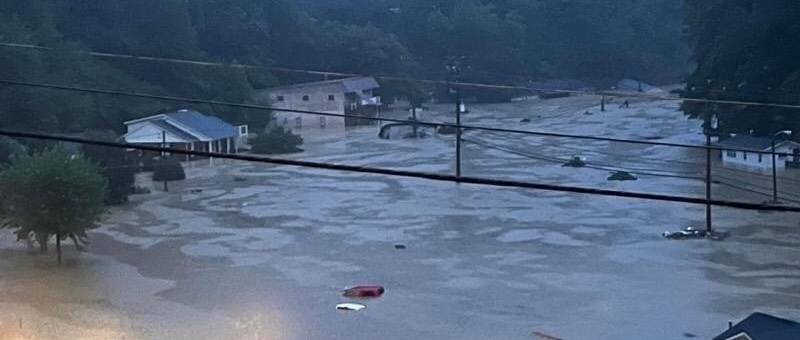
Currently, we have been taking teams of high school students to rural Kentucky in the Appalachian Mountains. It’s an amazing community that we have the privilege of helping recover from devastating flooding that occurred in 2022. While we are only 8-9 hours away from there, it is a completely different setting. Culturally it’s different, their vocabulary is different, how they do things is different, and even what they eat is different (remind me to share what soup beans are sometime).

In order to help your team prepare, it may good for you to do a site trip or a vision trip so you can bring back firsthand knowledge to share with them. Regardless of whether you can go to the site first or not, you should work to help your team to understand the setting and culture you are entering into. Set expectations, help them know what to say and not say, talk about what they will see and hear, walk through how to engage with the community, and help them prepare their hearts.

Providing updates.

Mission trip training sessions allow you to provide your team with all the updates they need. Whether it’s updates on the trips, updates on support raising, or updates on packing lists, training allows you to communicate what needs to be shared and help your team be as prepared as possible. Updates help your team to know what they need to know in order to be successful and capable in their service to others.

Engage in thoughtful conversations.

One of the parts our training includes is thinking differently about poverty, how we see people, and how we can help. We want our students to not judge people or fall prey to the typical societal responses toward those individuals who are living in poverty. In order to accomplish this well we incorporate videos from Helping Without Hurting from Life.Church. There are six videos in total and crafting questions for before and after the video will help your team think critically about how and why they are serving.

Mission trip training is vitally important to helping your team gel together, serve well, and be equipped for what they will be doing. Trip training doesn’t guarantee success but it does provide your team with the resources and training that they need in order to thrive on their trip as they seek to serve others.


Our Picks: Royal Servants

As a student ministry leader you have probably led your own mission trip or partnered with a mission agency at some point in your ministry career. We all know that mission trips are important in the lives of students because of how they impact their hearts and relationship with Jesus. We know that when they are in a focused environment, building relationships with people, and serving others, they will begin to grow as a disciple of Jesus.

If you have led your own mission trip before you know how much work goes into planning and leading the actual trip. There’s setting the schedule, organizing service projects, figuring out meals, scheduling travel, arranging sleeping assignments, handling debriefs, managing conflicts and stressors, and all the other things that pop up. Leading a mission trip that you are putting together takes a lot of preparation, planning, and intentionality as you not only lead but also care for your students, leaders, and the people to whom you’re ministering.

If you’ve found a partner agency to go with that meets your needs and focus as a ministry, you know how beneficial this can be. Our ministry typically looks at running our own trips or partnering with the different mission arms of our denomination. This allows us to make sure the vision and mission of our ministry align with those of the partnering organizations. But, I also love to find additional opportunities for our students that embrace our vision and actively engages in discipleship.

That’s where Royal Servants comes into the picture. Royal Servants is part of Reign Ministries and offers summer-long trips for all students including middle school, high school, and college age. These are trips that take place all over the world and are focused on reaching people with the Gospel and helping students to engage and grow in the discipleship process.

Like many youth workers, I found out about Royal Servants from a phone call. Hank Dahl, one of the mission trip leaders for Royal Servants, reached out to connect and to simply share his heart. What I instantly respected about Hank is he wasn’t looking to make a sales pitch or offer me something in place of what we do as a ministry. Instead, he wanted to offer an additional option but only after pushing our students toward our own trips. Hank’s and Royal Servants’ heart is to be an additional option for students with the express desire to help them grow in discipleship and missional opportunities.

The first time we had Hank join us, he asked if he could speak to our students. He didn’t ask to share his own lesson but instead offered to teach on whatever our series was focused on. Being a youth ministry veteran, Hank instantly connected with my students and did a superb job sharing that evening. At the end of his lesson, he gave a brief synopsis of who Royal Servants is and what their trips were for that year. He then encouraged our students to go to small groups and find him afterwards at a table in the lobby. Hank didn’t try to pull our students away from time in their small group but instead pushed them into their discipleship time and encouraged them to take initiative in connecting with him afterward.

Hank’s heart, that of his team and Royal Servants overall, is to partner with student ministries around the country and to help them provide additional avenues for their students to engage in discipleship and missional opportunities. We have had several of our students participate in trips with Royal Servants and all have come back changed and strengthened in their faith. When many of them returned, they took leadership roles and began to reach out to people in their schools and communities. They also began to push students in our ministry to serve in their spheres of influence and to go on mission trips with our student ministry. It wasn’t focused on just encouraging their peers to join Royal Servants, but to instead serve where God is calling them. This again highlights the way that Royal Servants equips and trains students and is why I will continue to invite them to our church and encourage my students to participate.

If you’re looking for a great partner organization, one that seeks to reach the lost and equip students as disciple-makers, then Royal Servants is the organization for you. I highly encourage you to reach out to Hank–let him know I told you to :)–and see what this ministry can do to help your students grow and flourish.

Helpful Items for Leaders to Take on Mission Trips

Mission trip season is upon us. This year we are taking two groups of students to vastly different places. Our scope and sequence for trips is to begin at the local level with middle school students and to build outward to regional and global missions as students move through their middle school and high school careers. This year we are doing an inner city trip nearby for middle and high school students and a disaster recovery trip for our upper classmen to Hazard, Kentucky.

Regardless of the trip you may be taking and where you are going, there are some essential things that all leaders of the trip should have ready to take with them and done before they leave. Today, I want to share some essentials that we take along on our trips and to hear what you take for your trips.

A good first aid kit.

Maybe this is because I have a background in security where we needed to be prepared for any situation and our first aid kits were stocked with everything and anything you could need. But I’ve also been in youth ministry long enough to know that you should prepare for the unexpected. This is why having a well stocked first aid kit is a necessity.

Too often we can default to a pre-made kit from the local mega store or Amazon, but they are usually packaged with very basic first aid items. My advice would be to buy a first aid backpack and stock it with your own items. That way you can switch out items for various trips and keep the consistent items in your bag to be adequately prepared.

Here are some things I would recommend for your kits: medicines like Benadryl, Advil, Tylenol, and Asprin; a good multi-tool; insurance info for you and your team; bandages including bandaids of various sizes, gauze, butterfly bandages, wraps and tape; eye wash; Propel powder or electrolyte pills; candy in case people have low blood sugar; intestinal medicine like Tums, Imodium, and Exlax; scissors; tweezers; splints and slings; cough drops; different ointments, wipes, and anti-itch creams; tissues; and hand sanitizer.

Coffee and tea.

You would think that these would be provided at any mission trip location, but more often than I’d care to admit I’ve found that isn’t the case. There have been multiple times where there isn’t coffee or the coffee is expired. That isn’t the fault of the agency or host because that isn’t their priority. But if coffee and tea are an important element for you and your leaders, it’s helpful for you to take some along as a way to care well for your team. I’d also encourage you to bring along a couple extra bags of coffee for your host as a way of blessing them.

Sunscreen, bug repellent, and remedies.

Many mission trips happen during the summer and require work that takes place outside. So having quality sunscreen and bug repellent appropriate for where you are serving is key. Make sure that you connect with the team or organization you are partnering with to get their recommendations for what to bring. It is also a good idea to have remedies for when they are needed. This could include things like aloe, after burn relief like Alocane, anti-itch cream, Cortizone, Neosporin, and similar products.

Flashlight, extra batteries, power strip, and adapters.

When it comes to being prepared for mission trips, flashlights and extra batteries are a must. Whether they’re being used to help on a project or for a game of manhunt or if you’re roughing it and need to find a bathroom at night, having a good flashlight and extra batteries are a necessity.

To go along with that, bringing a power strip and adapters when needed is also important. Have you ever been on a trip when there’s a limited amount of wall outlets? It can be incredibly difficult to charge everything and sometimes the outlets can get overloaded. So having a quality power strip is one of the best things you could bring along. If you’re traveling outside of the United States it is also important to have the right adapters for your electronics to ensure they will be charged and working abroad.

Travel documents.

Getting ready for a mission trip means having the right documentation for your destination. If you’re traveling nationally, you may not need much, but don’t only think in terms of passports. You may need an EZ-Pass or another electronic toll reader and you might need to have permission forms for various organizations that you’re partnering with. If you are traveling outside of the country you will need passports, immunization records, documentation for minors to travel abroad, and permission slips. These are some helpful things to think through and prepare for before leaving so you are properly equipped for your trip.

Extra money for incidentals.

The reality is that even with all the planning and support raising, incidentals will always occur on mission trips. Whether it’s purchasing extra supplies, taking a vehicle in for repairs, unexpected travel costs, or needing more food, things will happen. So make sure to have additional money for those moments. This can be both actual cash or making sure your credit cards have a proper credit line and. Doing this will help make sure you are adequately prepared. It is also important to make sure to put a travel notice on any credit cards. Some companies will put a fraud alert on your card if expenses are incurred that are outside your normal purchases, which can hamper your ability to use it on trips. So make sure you contact the company ahead of time to be prepared.

Communication.

If you’re traveling internationally or to an area that has poor cell reception, having a plan for communication back home or to needed contacts is important. This may mean purchasing an international phone and data plan, or scoping out if there will be access to WiFi in the area.

Protein bars and easy snacks.

I love to take snacks on any trip, but when you’re going on mission trips snacks aren’t always something we think about taking for a variety of reasons. But having some easy snacks and bars is essential because you may need them if someone is feeling lightheaded or faint from exertion, or for when your own student gets a little hangry. Some easy suggestions include Larabars, peanut butter crackers, protein bars, gummy candies or fruit snacks, and mints.

When you go on a mission trip, what are your must-haves?

5 Factors to Facilitating a Mission Trip

We are beginning to start our mission trip training for this summer. With two trips planned and two unique teams going, we need to make sure our students are adequately prepared and trained in order to best grow and serve. Our summer ministry rhythm alternates between doing some type of retreat or conference one year and a mission trip the following year. Regardless of whether it is a mission trip year or not, part of our vision for our program is to incorporate missional opportunities in all of our trips because of the mission Christ gave to all of His followers.

What that means is we are always approaching our trips with a mission-centered focus. In order to do that well, we must think through some key aspects. Mission trips that are just haphazardly thrown together are not all together a bad thing as opportunities may just present themselves. But the more intentional we are in thinking through how we can shape and facilitate the trip in an impactful and meaningful way, the better prepared we will be and our students will reap the spiritual benefits.

The points below are intended for those who are planning their own trips and not necessarily partnering with a mission organization. However, I believe these points translate into either type of trip. If you go with an organization some of the points may already be figured out for you. These are key avenues to engage during the very beginning of mission trip planning and are designed to help the main trip leader best prepare themselves and their team for the upcoming training and trip.

1. Know your objectives.

Mission trips are a wonderful opportunity to not only help your students grow spiritually but also to bless others through your actions and care. In order to achieve both of those realities, there need to be clearly stated objectives. If you know the objectives of your trip it allows you to shape and plan accordingly so you can accomplish said objectives.

Your objectives can be focused on the spiritual growth of your students, skill sets that need to be learned, tasks that need to be accomplished before and during the trip, building relationships within the team and with the community you’re serving, or whatever else you see as a goal for your trip. When you have your objectives focused and spelled out, you will then be able to guide and shape your trip and team accordingly.

2. Clearly communicate expectations.

Whether you are setting up team meetings, explaining guidelines for the location, sharing team member requirements, or detailing work expectations on the trip, the ability to clearly communicate expectations will help set your team up for success. This is true even when you are advertising the trip to your students. The clearer and more concise your communication, the more apt your people will be to understand and follow what you are asking of them.

When it comes to expectations for your students, never assume they know what they are even if you have taken them on prior trips. Each mission trip will be unique which means the expectations will be as well. So be clear, concise, and direct with expectations in order to set your team up for success.

3. Utilize team training.

Training for mission trips is a must. Without training you will be setting your team up for dysfunction and potential failure. Training allows the group to grow and deepen relationships, engage in team building, grow in the skill sets needed on the trip, have a better understanding of how to minister to the community you are serving, and to help each team member know more about themselves personally.

Training can include activities to simulate what you will be doing, practice or organize different elements needed for the trip, complete personality assessments, or engage in prayer times, team building, or evangelism and prayer training. It can also include watching videos or reading helpful books, bringing in teachers to help equip your team, or whatever else you find beneficial. These do not need to be exceedingly long or every week, but I would recommend starting training sessions 4-6 months before you are to leave and averaging 1-2 a month.

4. Highlight flexibility.

If you have ever led a student trip before you know the importance of flexibility. But often times our students never see that part of the trip because they are only engaging the trip not serving behind the scenes. That’s one of the key differences between a retreat or camp and a mission trip. On a mission trip students are serving and leading, not simply consuming. So helping your students understand flexibility, why it is necessary, and how it may look on the trip will help to strengthen and equip your team to do their best work and be for one another and the community you are serving.

5. Build your leadership team ahead of time.

As you are beginning to prepare for your trip it is important to recruit the necessary leaders for the trip before you begin to advertise it to your students. This allows you to have the appropriate student-to-leader ratios and it also helps you to have the leaders needed for the trip. We all have amazing leaders who serve in our ministries but not all of those leaders may want or be able to serve on a mission trip. So figuring out who can and should go ahead of time allows you to be better prepared for the trip by having your leadership team in place.

Mission Trip Reflections from Kentucky

I recently was able to take a short term mission trip to Hazard, Kentucky, to help with relief efforts following severe flooding in July. To say that this was an incredibly humbling and impactful trip would be an understatement. The devastation and hurt that I saw was unlike anything I have seen before. The stories I heard and the destruction I saw will remain with me for the long term, and it has shaped my vision for where we will be sending student teams for the foreseeable future.

This area of our country has been largely forgotten due to its location, socioeconomic status, disasters in other places, and more newsworthy media. But there remains much heartache, loss, destruction, and needed rebuilding.

Our team was focused on rebuilding and repairing homes and churches, and on hearing the stories residents of this rural area shared. The emotional, spiritual, mental, and physical needs are vast and everyone has a flood story in this community. Whether they lost something like a home or possessions or for those who lost someone, the hurt and pain in this and surrounding areas is very real and raw.

As I’ve had time to reflect and think about my trip, I have pondered the impact that trips like these have on our students and leaders. Today, I would love to share some of my thoughts and takeaways in the hope they bring you some insight and clarity when it comes to short term mission trips.

Mission trips are necessary.

Mission trips are so important in the lives of all believers but especially students. They are forming their understanding of faith and wrestling with deep and thoughtful questions. Mission trips help students see the Gospel in action and help them form a healthy, biblical worldview. But I think for some of us–myself included–coming out of multiple years where we didn’t do trips due to a pandemic, the necessity may have faded in our minds. We cannot allow that to be the case.

Going to Kentucky solidified the necessity of taking students on trips like these because of the way it helps to shape and mold their hearts for the kingdom of heaven. We cannot loose that vision and we must provide opportunities for students to step into new environments and see the Gospel in real and tangible ways.

Mission trips grab your heart.

It is so hard to put into words all that I experienced in Kentucky. I have taken multiple trips throughout my high school, college, and ministry years, but this one moved me in some powerful ways. Perhaps it was seeing the devastation and destruction firsthand. Or maybe it was the proximity of this disaster in relation to where I live (only nine hours away). Or it may have been hearing the accounts of people who lost everything and loved ones in the spans of moments.

Regardless of the reason, the reality is mission trips have a way of grabbing our hearts in ways youth group and church don’t often replicate. Serving with people who are hurting, experiencing the reality of loss firsthand, hearing stories, and seeing the power of both the Gospel and God’s people moving to action stirs something within our hearts like nothing else. This is why our students need to go on trips like these because it helps capture their heart for the Gospel in action and how it applies to their lives and others.

Mission trips move your students to action.

This past Wednesday and Sunday I was able to share about my trip with our students. I relayed stories, showed them pictures, and explained why help was needed. The response I heard from multiple leaders and students ranged from “we had no idea this happened” to “when are we going” and “what can we do.” When we are able to cast vision and share stories, it moves our communities to action and cultivates a desire to care for and serve those who are hurting.

Proximity breeds empathy.

This became so apparent to me once again as I was serving in Kentucky. When we are around those who are hurting or struggling, it moves our hearts and minds because we are sharing life with those who have experienced loss. The more we can get our students into areas and communities that differ from theirs in all capacities–socioeconomic, diversity, hardship, loss, etc.–the more they will be able to understand the hope and healing the Gospel brings and their calling to be the hands and feet of Jesus. And the more they will learn about others whose lives look different from theirs.

Mission trips will stretch and grow people.

Coming back home from my trip, something was different in me. The Spirit of God was tugging at my heart and pulling me toward an ongoing partnership with our mission agency in Kentucky. I knew that if I could cast that vision well to our students, they would also be moved to action. What I became acutely aware of was God was using my experience as a catalyst to invite others to action. And the same is true of our students.

As they go on these trips, build relationships and memories, and the Holy Spirit moves in their lives, students will return and help to ignite that passion and desire within others. It will not only stretch and grow the people who go on the trips, but we will see cascading effects on the people our students engage and interact with when they return home. They will help cultivate passion and excitement for Jesus and what He is doing in your youth group. They will tell their friends and families about what God is doing. They will ignite a passion to see the world changed among their peers. Mission trips have a far reaching impact beyond just those who go, and through these moments we will witness the kingdom of heaven grow and expand.

Tips for Picking a Mission Trip

Serving in student ministry often includes leading a mission trip at some point during your tenure. And if you are like me your education probably didn’t prepare you for it. I never took a class on preparing a budget for a mission trip nor did I receive any help in building a student fundraiser (check out a previous post on fundraising for some ideas). I also was never given any thoughts on how to pick a destination and what to look for.

Today’s post is designed to help you critically think through how to pick a destination that will have the desired impact and outcome with your group of students. These ideas aren’t meant to be all encompassing, but to give you a springboard from which you can build out a trip that meets the desired aspects you have for your team.

Scout the location.

This is honestly one of the best things you can do as a trip leader. Wherever you are going–whether domestic or international–the ability to scout where you will be and what you are doing will allow you to be a better leader for your group. It will also help establish confidence and insight for students, parents, and leaders. You can answer questions, help quell fears or doubts, share stories, and bring a personal touch to the trip, which will help build the team and shape the heart of the trip.

Look for ongoing partnerships.

Ongoing partnerships can help aid buy-in from your students. If you choose a place you can continue to engage with, it affords your students opportunities to build connections and relationships with that community. This then generates a desire to continuing being a part of what is happening, as well as excitement to continue serving in that area. This mentality also helps to align your students with the understanding that mission trips aren’t designed to be a one-and-done experience, but instead are about building relationships, serving others, and growing the kingdom of heaven. It builds an intentional relationship and partnership that will ultimately benefit that community and your ministry.

Find a trip that can connect with your students.

This is something I always try to think critically about as I look for a missions partner, but it doesn’t ultimately drive where we go. I do believe it’s important to consider the connection between students and where they serve as it will help shape their hearts and challenge them to think outside of their normal spheres. If students connect with a location, they will create momentum and desire that will overflow to other students and hopefully generate a stronger response and desire to be part of the mission. With that said, a connection isn’t the ultimate driver of where we go because students may see greater change and spiritual impact at a location with which they don’t initially connect. If they do connect with a location it’s an added bonus.

Consider local and global options.

Sometimes our propensity can be to look for more exotic locations or ones that are outside of the continental US. But that isn’t always an option for every group and there are amazing domestic opportunities in which groups can participate. I encourage every youth leader to consider looking at both local and domestic options, as well as global opportunities, and try to find a balance between them.

Look for discipleship pathways.

Discipleship is the foundation of our ministry, so we always look for mission trips which further that focus. We don’t want to just take our students to a location to work hard, we want them to be formed and stretched as followers of Jesus. We value discussions and small group time, engagement with the people we’re serving, challenging students to think about how they can grow and change, and thinking long term about what changes they will implement in their lives.

Understand how students will serve and contribute.

Mission trips are fantastic opportunities for students to serve in real and tangible ways. However, some mission sites require skilled laborers or people trained in skill sets that students may not have. If you are going to a location that has been struck by a tragedy, they may desire contractors or counselors and often students do not fit these needs. However, they may be able to general maintenance, VBS programs, certain aspects of construction, outreach programs, and a variety of other tasks. If students can fully contribute and be a part of the mission, they will continue to serve and have a desire to be a part of future mission expeditions.

Have training options and resources planned ahead of time.

This is a big part of choosing a location. Make sure that you can equip and prepare you team for wherever they are going and for whatever tasks they will be doing. Whether it’s walking through When Helping Hurts, doing evangelism training, having mission reps share, bringing in someone from the site, engaging in skills training, or just team building, these aspects will all help to not only strengthen your team but inform and equip them as well.

Build out what you want students to come away with.

If you build out a plan for your students prior to choosing where you will go, you can make sure that each location will match your desired outcome. By building a plan and making sure the mission matches the plan you will have higher success when it comes to providing your students with what you desire.

What aspects dictate how you choose a mission trip location?