Small Group Game Ideas

Last week we looked at socially distanced games for groups that can gather in larger numbers. These games can work for some ministries, but other youth groups have made the switch to meeting in smaller groups to accommodate state and federal guidelines.

With that being said, I would like to share some game ideas for smaller groups. Some of these are the same as last week because they can also be played in small groups with minor tweaking. This isn’t an all encompassing list, but merely an attempt to share some resources that we have found to be helpful and beneficial.

Zoom Games

The reality for many of our groups is that we will be meeting virtually at some point this coming semester. We don’t like to think that way, but it is better to be prepared for it than not. So I would encourage you to think through different Zoom Games that you can play. An easy option is utilizing PowerPoint style games that you can screen-share with a group. Another option is doing trivia over Zoom or a “Would You Rather” style game. The cool thing with all of these ideas is you don’t necessarily need to come up with them. Download Youth Ministry has an entire section on their website where you can purchase these games and many more. I would encourage you to start building up your resources now to prepare for the fall. And if you don’t end up meeting online, these games can transition easily to in-person gatherings as well.

Charades

Who doesn’t love a classic game of charades? The general idea is that you will have someone acting out an action, character, or activity that they have pulled from a hat. These can be pre-made by you and your volunteers or you can have students submit suggestions. There are lots of different ways to play Charades like as small groups guessing, or as a large group guessing, or even reverse charades where one person guesses while the whole group acts it out. Whichever one you choose, make sure to remind the people acting out that they can not make noise or they forfeit that round.

Apples to Apples

This is a classic party game and is fantastic for small groups. It does require you to purchase the card game, but it will provide lasting fun for your group. There are also many different editions that you can choose from depending on what your group will enjoy more.

The premise of the game is this: The judge picks a green apple card from the top of the stack, reads the word aloud, and places it face up on the table. Players (except the judge) quickly choose the red apple card from their hand that is best described by the word on the green apple card played by the judge. Players place these red apple cards face down on the table. The judge mixes the red apple cards so no one knows who played which card. The judge turns over each red apple card, reads it aloud, and then selects the one he or she thinks is best described by the word on the green apple card. The player of the selected red apple card is awarded the green apple card played by the judge.

Yard Games

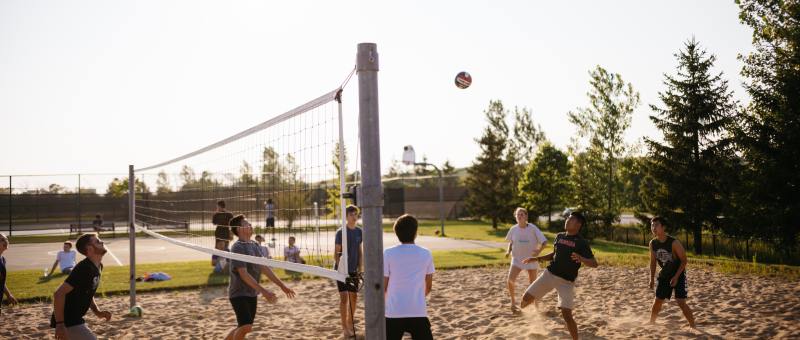
Being able to gather outdoors while the weather is nice is a huge blessing in many ways. Games outdoors are a huge win and don’t need to be planned out in great detail because many of them can run themselves. Some great yard games include cornhole/bags, ladder ball, giant Jenga, badminton, socially distanced volleyball or basketball, Kan Jam, Frisbee, horseshoes, or Spikeball. All of these options allow for social distancing and a ton of fun.

Heads Up

If you are not familiar with Heads Up, you need to download it now and play it. It is a ton of fun and guaranteed to get your group laughing. Heads Up is an app that you can download, but it does cost money. However, there are multiple free versions that you can download as well including the Charades App, Guess Word! Fun Group Games, Charades – Heads Up, and Charades! Kids. I would just encourage you to try them out prior to the night-of.

The way this game works is someone holds the phone up to their head while the app is running and a random word or words will pop up on the screen. The guesser will need to guess the word(s) by the clues that the audience gives. Most apps will let you know how many you get right, and you can have a friendly competition among your group.

Costume Challenge

This is an activity that can be done both in-person and online. I have had many of my leaders host online costume parties, and they change the theme each week to make them more fun and engaging. You can also do this in person, and if you have to wear masks you could even see about having students tie the masks into their costumes.

Scavenger Hunts

Doing scavenger hunts is a really easy and fun way to get students involved and moving, and they can be done in person or digitally. If you are meeting at a home, you could give a list of objects and tasks to your small group to find or complete around the home and/or neighborhood. If you are doing it digitally, you could have them find different items around their house and the first to show it on screen wins the round. Last week we shared about a great website/app called Scavr that allows you to create scavenger hunts that utilize the app and all that data and points are accumulated through an online leader board.

Users must download the app and sign up in order to participate. They then create a team name and will be able to see the challenges that you have put into the game. The beauty of this app is that it tallies the results and shows a leader board throughout the event. It removes the headache of trying to create and tally everything on your own, and makes it really easy.

Trivia

Who doesn’t love a good trivia night? You can set this up for small groups or for individuals to compete. If you Google trivia questions, there are countless websites for you to choose from or you can pop on over to DYM and find a ton of games that you can plug and play for your group.

Message Bingo

This has recently been making the rounds in various online groups, but the overall gist is that you create a Bingo board with different things that will pop up throughout the message or the night. You can add squares like “the pastor said ‘umm'” or “everyone wore a mask” or “pop culture reference” or “bad joke by pastor.” You can have as much fun with this as possible, and you could even offer prizes as well. There are lots of online generators for Bingo cards, but this website offers up to 30 free printable cards that you can change the layout and design on.

The Hat Game

This is a really fun game to play with any size group, but in smaller groups you can play multiple rounds. The premise is fairly simple: there are three rounds of game-play and two teams. In the first round one player will draw pieces of paper out the hat and try to get their team members to guess what is written on them by only using Charades. The next round is the player tries to have their team guess using Pictionary, and the final round they can speak but not say the word or what it sounds like. Each round is timed and then you rotate teams.

The fun part about this game is you can switch up the categories, the method for sharing clues, the timing, and much more. It is a game you could continue to use no matter the circumstance, and each time it will be an entirely different game for your group. For more ideas and a more complete set of instructions, check out this website.

Xbox/Wii/Switch Games

I am not normally one to encourage playing video games, especially during youth group time. But there are games on Kinect, Wii and Wii U, and Nintendo Switch that are great group games to play because they are somewhat active and allow for four or more people to play. I will say this though: be cautious with what games you choose and make sure that they are games parents and your ministry approve of. You never want an activity to become a stumbling block.

Would You Rather

These are great conversation starters and allow for you to actively engage your students with both fun and serious questions. I would suggest setting ground rules for your group that include no making fun of someone’s answer, no course or crude joking, and always answer honestly. A couple of websites that I enjoy using include Conversation Starters World and Icebreaker Ideas. Both of them have solid ideas for questions with a broad range of topics and age ranges.

Highs and Lows

If you aren’t familiar with this idea, it is a great way to begin conversations within a small group. Many of my leaders use this each week because it gets students talking and engaging with the group. It can look different depending on your group and its dynamic, but the basic functionality is this: each student and leader will share anywhere from 1-3 high moments from the week and 1-3 low moments from the week. They can be funny or serious and they can lead to some fantastic laughs and amazing deep conversations.

House Party

House Party is an app that allows you to video chat and play games with your group. I would recommend utilizing the privacy settings and make your room locked so only certain participants are allowed in. But with this app you can play different games together as a group and video chat at the same time. It is very similar to Zoom but doesn’t require screen sharing for games. Everyone will need to create an account and have the app downloaded in order for this to work for your group. So make sure your students know to do that ahead of time.

House Party gives you different game options like Heads Up, Uno, Trivia, Quick Draw, and much more. It is worth downloading and giving it a test run before you implement this with your group so you know its inner workings and limitations.
What are some of your favorite small group games?

Socially Distanced Game Ideas

As many of us are looking at returning to some sort of programming soon, it is important to critically think through what activities and games we will be hosting. Because let’s face it, most of our games are not about social distancing. In order to provide a safe place for students and volunteers, it is important to think about what games will provide the most fun while still being safe.

The games below can be shaped to fit any style or size of youth ministry, but they are primarily for whole youth groups that are regathering. Next week, I will share some game and activity ideas for small groups as many youth ministries are moving toward that direction of ministry going forward. Before we get into the actual games, I wanted to share a few quick tips to make these games successful and safe.

  • Smile and have fun. The more excitement and fun you have, the more engaged your group will be.
  • Encourage social distancing. You don’t have to be an enforcer, but helpful and kind reminders will go a long way.
  • Provide hand sanitizer stations. If kids are touching one another or communal objects, have these areas for immediately after.
  • Encourage hand washing. Even with hand sanitizer, it is beneficial to wash often after activities and before eating.
  • Remind everyone about the rules. Whatever rules your state and church are following, make sure to encourage adherence to them for everyone’s safety.

Scavr

Scavr is a great new resource for creating scavenger hunts that are hosted through an online platform. Users must download the app and sign up in order to participate. They then create a team name and will be able to see the challenges that you have put into the game. The beauty of this app is that it tallies the results and shows a leader board throughout the event. It removes the headache of trying to create and tally everything on your own, and makes it really easy.

A scavenger hunt is also a great activity to socially distance in because you can send out small groups and ask them to maintain the six foot rule, which will be easier to follow in small groups. Just keep that in mind as you create the challenges (i.e. no human pyramids, which equals less people getting hurt).

The Floor is Lava

This is an old school game that has been having a recent resurgence. If you aren’t familiar with the rules the game is fairly simple: do not touch the ground or you are out. The object of the game can vary from completing tasks like collecting objects or moving a team to a safe zone, to completing an obstacle course, to a last person standing challenge. The game can be as creative as you can imagine and will allow for various people to play but also socially distance.

Up Front Games

Depending on the size of your group and the rules you need to follow these may have to be your go-to activity for the time being. These types of games could be trivia style, rap battles, PowerPoint games, or any of a number of Jimmy Fallon-inspired games. These can be done with as few or as many people as you would like, and they can be done in a safe manner as well.

Seated Basketball/Soccer/Football

This is a personal favorite of mine. These games take the traditional sports we love and turn them on their heads. You do not have to be super athletic to play these games because you are seated the entire time. Before you start the game, set up your playing area whether it is indoors or outdoors. Simply place chairs where players will sit the entire game or period and label which team they are for. Then have your students pick a chair and get ready to laugh.

The rules are the same for whatever the game is with one addition: students cannot move from their chair. Have leaders roaming to place the balls back in play when needed. You can also change up the rules and objectives to add another layer to the games as well.

Trivia Games

Who doesn’t love a good trivia night? You can set this up for small groups or for individuals to compete. If you Google trivia questions there are countless websites for you to choose from or you can pop on over to DYM and find a ton of games that you can plug and play for your group.

Hula Hoop Volleyball

This is an easy game to set up and run with. Simply set up a volleyball net, or something in place of it like a sheet on clothesline, and then place hula hoops on each side that are six feet apart. The rules for volleyball don’t change, except that students may not leave their hula hoop during the game unless it is to rotate spots during a change in servers.

Scattergories

This is a great game to play as a small or large group. If you are playing as a small group give everyone a score sheet and have them all compete against one another. You or a leader will assign a letter and have the students write words beginning with it.

If you have a larger group, consider setting this up tournament style. Have students all compete with same letter and then when time is up they will compete only against the other person at their table. The winner will advance to the next table, while the loser stays at the table. If there is a tie have them play Rock, Paper, Scissors to decide the victor. The person with the most wins at the end is the champion.

Cornhole/Bags Tournament

If you do not have a couple sets of these for your youth ministry, let me highly encourage you to get some. I have purchased these before and they have held up very nicely. The very nature of the game allows for socially distanced fun, and you can turn it into a tournament to decide who is the best cornhole player. You can also set up varying degrees of game play (i.e. closer or farther away) to make it more of a challenge for your students.

Charades

Who doesn’t love a classic game of charades? The general idea is that you will have someone acting out an action, character, or activity that they have pulled from a hat. These can be pre-made by you and your volunteers or you can have students submit them. There are lots of different ways to play Charades like as small groups guessing, or as a large group guessing, or even reverse charades where one person guesses while the whole group acts it out. Whichever one you choose, make sure to remind the people acting out that they can not make noise or they forfeit that round.

Pool Noodle Tag

This is a game that will require a little more prep but can be a lot of fun. The premise is you are playing tag, but the only way you can tag someone is with a pool noodle. Make sure you have ones that are close to six feet long and explain to your group that they must hold it at the back end and reach out the pool noodle to tag the other players. It may be helpful to demonstrate proper tagging, especially if you have some overly zealous young men like I do who like to swing the noodles as weapons.

Nerf Battle

I don’t know if your students are like mine, but mine love a good old fashioned Nerf Battle. Having it now will look different, but it is still a viable option. You can set rules to include being six feet apart and if you get too close, you are out or need to re-spawn. I would encourage not swapping weapons unless they are wiped down, and always have eye protection. This would actually be a great game to encourage using face shields in because there will be minimal push back (and eye protection).

What games are you doing as your youth group regathers?

What Will Your Youth Ministry Look Like?

Let’s face it: youth ministry as we knew it back in January and February is no more… at least for the time being. Because of the Covid-19 pandemic our programming, scheduling, and events will look radically different going forward.

Perhaps you have already been thinking through this or maybe your superiors have asked you to begin building a plan. Some of you may even have begun meeting again. But the question we need ask ourselves is this: is how we did ministry before going to continue? If the answer to that is no, we must creatively think through what we are going to do once fall arrives.

Families are looking to the church to make informed and timely decisions that put the physical and spiritual health of their people at the forefront of whatever happens. We bear the responsibility to keep our students, families, and volunteers safe going forward. I would like to share some key things to consider going forward in this new season of ministry.

Know what families desire.

An easy way to do this would be to send out a brief survey to gather insight and viewpoints about decisions going forward. Ask questions like:

  • Would you prefer to have youth group meet online, in person, or in small groups?
  • Will your students attend if they have to wear masks?
  • What would make you feel safe and confident about your student returning?
  • What requirements and safeguards would you like to see in place?
  • What suggestions do you have for our ministry?

Know how your leaders will respond.

This is something we must take into consideration. Our leaders may be immunocompromised, they may work in a high risk area like nursing homes or hospitals, or they may live with people who are more at risk. Talking to your leaders and finding out how they feel about programming going forward will help you to plan effectively and care well for your leaders.

In doing this, you may even gain some insight on how to proactively move forward. Your leaders serve in a variety of capacities outside of your program, and they bring knowledge and creative thought that perhaps hasn’t yet been considered in your circles. So come to listen, share, and gain insight into how your leaders will engage going forward.

Make informed decisions.

If you are like me, you cannot wait to be back with your students. I have not met with my students in person since March, and we have only now begun to see them in smaller gatherings, such as grad parties, since our state allowed smaller groups to meet. Going forward though, we are most likely not having any programming until the fall. That is really difficult news for my team, my volunteers, and our students and families. But we have rooted our decisions in multiple facets.

Our church has health professionals advising us, we are looking to utilize sound science, we have held all of our decisions in the context of Scriptural truth, and we are approaching everything we do with a humble heart. I am not saying that our church and leadership has made every decision perfectly. We have tried hard, but like everyone else, we are only human.

What I am encouraging leaders to do is this: make timely, informed, and well thought-out decisions. Don’t simply launch into programming like before just because you can. Don’t dismiss other views because you don’t agree. Don’t make quick decisions in the moment. And don’t allow for what we consider to be our rights to keep us from caring for others as Jesus would want us to. Make decisions that reflect Jesus and put the health, well-being, and spiritual care of your people first. This may mean things will look different, but ultimately our goal is to point people to Christ, and even in these decisions we should be doing just that.

Consider your ministry’s priorities.

This last point is probably the hardest. In recent months, my team and I have evaluated what we believe to be the priorities in our ministry. These haven’t been easy conversations because we had to ask questions like these:

  • Are games important?
  • What if we can’t serve food?
  • Will people come if they have to wear masks?
  • Do we need to have large group teaching?
  • Can we switch to a full-on small group model for ministry?
  • Are we committed to meeting only on a certain night at a certain time each week?

These questions have forced us to wrestle deep within our own hearts. If I am honest, I do not want to stop large group teaching. I love it. I love being in front of my students and expositing God’s Word. But if I am being honest, I must admit that there is quite a bit of pride in that too. Pride in being the up-front person, and having that be a focal point of the program. So we have begun to take a hard look at the ministry and we have plans in place if we need to make changes.

Be willing to step back and take an honest assessment of your priorities and why they are priorities. Consider bringing in some trusted leaders to help in this process and to begin planning the future with them. This will not only help you, but will bring strength and buy-in to your ministry as well.

How are you planning for the fall in your ministry context? What changes are you making?

Tips for New Youth Pastors [Part 2]

Last week we took a look at some general tips for anyone starting a new youth pastor position. However, given that we are currently trying to do ministry during a pandemic this can look very different depending on where you serve. With safe guards in place and new requirements coming up frequently, it is important to address different ways of engaging with your students, families, and leaders in this new normal.

This week I want to share some helpful tips for those starting during this season that apply to a more socially-distanced style of ministry.

Coordinate digital meetups.

I know that many people hate video calls at this point and that Zoom-fatigue is setting in. But try hosting meetups online where people can come and get to know you. If you are doing it for students, try to engage with them outside of the normal meet and greet flow. Have some online games, utilize prizes (digital gift cards are awesome, especially if you can get them to local stores/restaurants), set up a digital scavenger hunt, or have people come in costume. All of these will help engage students who may not be super willing to jump into another Zoom session.

Increase your online presence.

Most youth workers have social media, but if you are like me… your personal feeds may be lacking. I don’t post often, and my students let me know. Even students who I don’t know personally have told me I need to up my Insta game.

My point? Students see us in all capacities, whether in person or online, and they are watching us. A great way to help students get to know is by posting about yourself. Not in some egotistical way, but in a way that shows who you are. Post pictures of your spouse and family doing things together, post where you are going or what you are doing especially if it is in town, host AMAs (Ask Me Anything) and polls in your stories, ask for advice on what to do and where to go. These are just a few ways to help you engage with others.

Utilize your youth group’s social media.

Depending on the size of your church and youth group, you may have social media accounts set up for your youth group. If so, leverage that to help people get to know you. Post about who you are and share some fun facts. Host a “get to know the youth pastor session” on your youth group’s pages. Post fun and funny videos of you getting acclimated to your new work environment. Post “Trivia Thursdays” and whoever answers the most questions correctly wins a digital gift card. Ask questions through a poll on your social media page or story.

Here are some easy questions to utilize in a post or story:

  • What would you like to see this coming year?
  • What series or topics would you like to have covered?
  • What is one thing you would like to see changed?
  • What is your favorite memory from youth group?
  • Why do you come to youth group?
  • What worship songs would you like us to play?
  • What would encourage your friends to come?
  • What games would you like to play online or in-person?

Send a note or postcard.

This will depend on the size of your youth group, but consider sending students a little hand written note introducing yourself, sharing about a digital meetup, and saying how excited you are to meet them. Receiving an actual letter or postcard is a sure way to connect with a student and their family as they will see you taking an interest in their student’s life.

If you serve in a large youth group and this isn’t a feasible option, consider sending a handwritten note to all your leaders. Your students will be looking to their leaders to get a feel for the new youth pastor, and if they have a good feeling for you it will be replicated to their students. It is also a sure fire way to value and elevate your leaders.

How have you seen ministry succeed during this time? What have been “wins” for your ministry?

Tips for New Youth Pastors [Part 1]

Even in the present state of things–with COVID-19 and certain states being under “stay at home” orders–churches are still hiring. Some are even hiring “online pastors” because of the current realities affecting ministries. That means that there are many people who are applying and being hired at churches.

Being hired at a new church is challenging on its own, but then you add in this new mix of social distancing and trying to connect electronically, and it is increasingly difficult. So what do we do?

Today, I would like to provide some tips and suggestions for new youth pastors in any season and then next week my desire will be to share tips for new youth pastors in our current circumstances. I would love to dialogue with anyone on this topic, especially those of you who are starting fresh in this new season.

Ask questions.

This is huge because it will give you insight you may not have had before. Often when you candidate you don’t get to meet everyone and you don’t get to have all the conversations that you may need. So ask questions. Talk to your students and ask them what they would want to see at youth group. Ask them what they value and desire. Ask what would encourage their friends to come. Engage with parents and ask them what resources would be helpful. Ask how you could better partner with and support them. Ask how you can better care for their students. Talk to your volunteers and ask them how you could better equip them. Ask them how they have been trained in the past and what would help them going forward. Ask them how you could best support, advocate for, and walk with them.

These questions and answers will give you insight into how to best care for your people and ultimately make you a better pastor. Asking questions, investing in people’s lives, and being willing to be challenged will help you to develop as a leader and value those you serve.

Listen.

I think it is easy at times to come in and think we know what to do and how to do it. I don’t think this is out of pride or arrogance but out of a desire to show that we know what we are doing and prove to the church who hired us that they made the right choice. But often times that means we don’t listen well or heed advice. Let me encourage you to take time and listen to what others are saying and to value it.

This will also allow for you to learn about any so-called “sacred cows” that exist. These are things that are immensely important to the church, that are difficult or impossible to change. While you candidate, most churches will tell you that they don’t have one. All churches do, but sometimes leaders don’t even know they exist. By listening to people you will hear what they value and why they value it, which will help you to learn what is the “sacred cow” within the ministry and the church at large.

Engage with students, leaders, families, and church members.

This seems obvious because of what we do. We are pastors after all and part of our job is to engage with our people. But the truth is that sometimes it can be overwhelming in the beginning. Everyone wants to talk to the new pastor, everyone wants to know your plans for the ministry, everyone has their own ideas and agendas.

It can be taxing and draining, and there will be moments you may find yourself mentally disconnecting from conversations. Don’t allow that to happen. Engage with people and hear what they have to say. Be willing to value people and their thoughts. By doing this, it will allow for you to become more attune with what people are seeking from you, your ministry, and the church. This can allow for you to become a better minister to them.

Go out into the community.

I think this is one that we all know and value, but if we are honest when we move to a new place sometimes we focus on settling in. That doesn’t mean we don’t care about our new community and the people in it, but sometimes we just hunker down as we settle into our role. But let me encourage you to engage with the community as much as you can. Go to the local supermarket, check out the local middle school or high school football game, visit local restaurants, hit up local parks. By doing this you are not only gaining the lay of the land, you are also showing that you are a part of the community and value it. You may even have church members stop and greet you which will help you build relationships.

Network.

This is a huge asset to anyone in any position, but if I am being honest it doesn’t happen enough in ministry. Youth workers are beginning to change that, and I want to encourage you to be a part of a local network as best you can. As you start in a new position, reach out to other youth pastors in the area and seek to grab coffee or lunch with them. Talk to them about what has worked for them, ask questions about the community and the area, be willing to partner with them for the sake of the Gospel. In doing all of this you are building friendships, confidantes, and support networks to help you succeed in your ministry.

Share your purpose and vision.

This is huge for any new youth pastor. In a new ministry it is easy to assume that everyone knows what you are about and the direction you want to take the ministry. But the reality is that there will be those who don’t, and those who need to continue to hear it over and over. While you have had the time to think through and plan because of the hiring process, other people need time to hear, process, and jump on board. So make sure to drip this into all of your communications and to share it with families, students, leaders, and church staff.

Over communicate.

Communication is key. That is something everyone should remember, and in a new position it is important to make sure you communicate often and clearly. Make sure to engage with your leaders, students, and families and use that time to communicate what you want them to hear. Do not assume that if you say it once or twice everyone will remember what you said. Over communicate not because people don’t get it, but because it helps them to be on the same page with you.

Empower your volunteers.

Your volunteers are key to your ministry growing and being sustained. Without them your ministry will not function. So make sure to encourage and empower them. Let leaders utilize their gifts and strengths. Encourage them when you see them doing what God has gifted them to do. Be free with your role and allow leaders to step up and serve. One of the things I love to do is be open with the stage. I don’t have to speak each week, in fact my students listen more when their leaders share. This is huge because it allows for multiple voices to be heard and valued, and it affirms and builds up leaders who are using their gifts. Find out your leaders’ strengths and passions and put them into practical use.

Set boundaries.

This is hugely important for all pastors and youth workers. Often we jump into a new position and we go as hard and as fast as we can. We go to all the events, attend all the meetings, work long hours, throw awesome outreaches, and begin to burn through all the reserves that we have.

This type of approach may work in the beginning, but ultimately it will leave you exhausted and burned out. It will also frustrate your volunteers and hurt your relationship with your family. You need to make sure that you are taking care of yourself and putting your priorities in order. Often we think the ministry comes first, but the reality is the order should be our relationship with God, our relationship with our family, and then our relationship with the ministry. Setting and enforcing boundaries allows us to focus on priorities, take care of ourselves, and be present for others. 

If you are starting at a new church, what questions do you have? If you are helping a church look for a new candidate, what do you look for?

Life After Lock-Down: Tips for Regathering

When it comes to reopening in the wake of Coronavirus, churches in many states have been afforded special rights and privileges as non-profits and houses of worship. We may be permitted to gather and congregate, but there are still recommendations and requirements that should be followed.

We must remember that in all things we need to represent Christ and look to reflect Him and His heart for people to our congregants, communities, and the world. We bear the responsibility to make timely and informed decisions in a reality we were unprepared for but called to lead in nonetheless.

In light of that truth, I wanted to offer some suggestions to help us as we are regathering or preparing to do so. Please know that these are not a foolproof method for reopening, but simply suggestions to help us do this in a proactive and Christ-honoring way. It is not reflective of any one church or methodology, but simply suggestions for how we can think through this as leaders and shepherds.

Don’t rush to get together.

It is easy to push to gather sooner than we should because we so desire community. But we must make sure it is safe to do so. Do not simply gather because you can, gather when you should. Put safe guards in place, communicate well, and honor the guidelines set forth by the church and governing authorities.

Be a force for unity not division.

It seems that for many churches, our ability or right to gather has forced us to take a stand that has lead to much division and fracturing. We cannot be leaders who cause strife and undue division, but instead seek to be voices of the Gospel that honor those in authority as we seek to reflect Christ to this world. I am not advocating for capitulation, but I am saying be mindful of your speech and actions and look to unite people together as Christ did. May we put aside biases, personal agendas, and political parties, and simply be a force for the Gospel of Christ.

Root your decisions in the Gospel.

It seems that for many churches the guiding principle to gauge reopening has been if their rights have been infringed upon. But that isn’t how we should measure if and when we gather again. We must remember that we are not due any rights because of our inherent sinfulness. I know we could go back and forth about our rights here in the USA, but why do we find our identity in our country and assumed freedoms? Shouldn’t we find it in Christ, and Christ alone? If we understand that in all things we must reflect the full Gospel, then we should know that reopening must be rooted in representing Jesus by caring for our churches and our communities.

So we must ask ourselves if what we are doing is a proper reflection of the Gospel, or a manifestation of rights we believe we are owed. We must remember that first and foremost we are to be a voice for the Gospel. Everything we do should reflect Jesus to our world. How we go about reopening, the safeguards we put in place, and the ways in which we minister to our people should all be outlets for the Gospel. Our care, love, and motives should all be to reflect Jesus.

Guard your speech.

It is so easy in today’s context to use our speech in non-constructive ways. We can hastily fire off a Facebook post, share something on our social media to push an agenda, or have a flippant conversation that is overheard and could bring about difficulties for the church at large. We as shepherds of our people must guard what we say and make sure we are not contributing toward tension, frustration, or dissension. All of those will only further fracture and divide our churches. Instead, seek to listen and engage in healthy and constructive dialogue that looks to encourage and build up the body of Christ.

Be proactive not reactive.

As you prepare to open back up, think about ways to keep everyone safe and healthy. This may mean you start with multiple layers of safety procedures and changes which are okay. It is easier to remove safety procedures than it is to add them. We want to be shepherds who do all we can to protect and care for our people, and as new information and data are made available, you can always scale back to adapt. If our people just see us adding more restrictions because we didn’t do it in the beginning, it may cause their trust in us to wane.

Don’t do things just because you can.

Lots of churches are meeting and lots of churches are doing things differently. But before you do things, let me ask you a question: why are you doing them? Is it because you can? Is it because it makes a statement? Is it because of external or internal pressure? Let me encourage you to think through the “why” before you do anything.

I know many churches that have relaunched and have gone back to “normal,” but we have to ask ourselves if this the best thing to do. When restaurants, malls, communities, and countries still have measures in place to protect people, should we as the church buck the system just because we can? Instead, I would encourage us to do things in a thoughtful and measured approach to show how we love and care for our people.

Hear and respond to criticism.

Criticism happens. In fact you have probably seen or heard a lot of it since this pandemic began. But here is what we as leaders and shepherds must do: listen to our people, hear what they are saying, and respond well. When people criticize it is often a representation of a deeper heart issue or concern. We must listen to them and truly hear what they are saying. One of the last times I preached I received an email that heartily disagreed with what I said and how I said it. I am not going to lie, it hurt and I wanted to respond in kind. But I knew that wasn’t right.

Instead, I sought council from those over me and on my team, and I ended up personally connecting with the individual who sent the email. I heard their concerns, I asked questions, and ultimately we agreed to disagree. But then I took the conversation in a different direction and thanked the person for sharing, and told them how much our church loved them. The change was staggering. The person was so thankful and moved, and they emphatically stated that even though we may disagree they will always call our church home.

My point here is this: no matter what decision you make in regard to reopening, no matter what safe guards you follow, and no matter how much you communicate, there will always be criticism. But it is essential to respond with love and understanding and seek to emulate Christ in all things.

5 Tips for Navigating Current Conversations

Our current cultural climate has sparked many a heated conversation. If you utilize social media, no doubt you’ve at least witnessed, if not engaged in, an online debate that at one point or another turned ugly.

As representatives of the Gospel to our students and the world, we must frequently ask ourselves: How can I reflect Christ Jesus in all of my interactions?

In this week’s blog post, we want to offer encouragement and some simple suggestions for navigating conversations in a healthy, God-honoring way. Rather than simply disengaging, we want to interact in ways that will show people the heart that Jesus has for the world.

1. Seek to reflect Jesus Christ.

This may be the most simple and obvious suggestion, but it is no doubt the most difficult. It involves challenging ourselves to operate beyond our natural tendencies, personal opinions, and cultural assumptions.

The best way to reflect Jesus is to know Him, so starting each day in the Word and prayer will help to orient your thoughts and attitudes toward Him. Before engaging in conversations, ask God to give you words to say that will bring Him glory, and ask Him to help you treat each person like an image bearer. This simple step can help rein in a heated response or gut reaction and cause us to refocus on what truly matters.

May we remember that the advancement of the Gospel is more important than anything else we may hold dear.

2. Avoid making it political.

Issues within our culture are often assigned a political bent, and based on where we fall politically, we will see these issues differently. But before an issue is a platform, it is something that affects human lives and hearts. As a representative of the Gospel, may we challenge ourselves to care more about other people than about our political leanings.

Instead of looking for ways to spark (or win) a debate or argue a political point, seek to emulate God’s heart for people. Demonstrate His presence, His care, and His ultimate solution for all humanity’s problems–salvation through Jesus Christ.

May we win more hearts to Him than political debates.

3. Meet people where they are.

For the daily issues we encounter, there is not a one-size-fits-all solution. People will experience and deal with problems differently. Rather than assigning the same cookie-cutter solution, or writing off someone’s struggles, seek to meet people where they are and help them in that place.

This is especially important when interacting with your students. It can be easy to lump students all together, and therefore think that they should all feel the same way and deal with their issues similarly. However, things like personal experience, home life, and mental health, will cause students to view the world and their problems very differently.

This is why it is extremely important to invest time into understanding others before we seek to help them or offer solutions. Some ways to do this are outlined in the following points.

4. Ask questions, and don’t assume you know the answer.

The only way to get to know someone is to learn about them, and the best way to uncover their needs, hurts, and life experience is to ask questions. Don’t assume anyone has had the same life experiences you’ve had, and don’t assume they respond to problems the same way. We are each complex individuals, and even though we may have similar life experiences or beliefs, we are all different.

In fact, to make assumptions is to cheat yourself out of knowing someone else, and to rob them of the opportunity of being known. Assumptions cheapen relationships, and cause us to miss out on the gift of knowing each other. Even if you think you know the answer, ask. Allow others to open up, to share about themselves, and to get to know you, too.

May we seek to know each other, rather than assign labels and assumptions.

5. Listen to understand before responding.

Many of us have experienced this type of conversation: no matter how many times you try to explain something, the person you’re talking to is more concerned with their response than what you are actually saying. This leaves you feeling frustrated, unheard, and ready to give up on the other person. And unfortunately, these types of interactions frequently happen in a church context.

Let us do whatever we must not to become the person who responds without listening. You may have the Sunday School answer, but to do this is to ignore the person and focus on making a point, which is ultimately dehumanizing. Instead, challenge yourself to pay attention to others, to think about what they are saying as they are saying it, and to ask clarifying follow-up questions. Active listening demonstrates your care and regard for others, and shows that they are more important to you than simply winning a debate. It can also show that you hold them as more important than yourself.

Seeking to understand others is a way of building bridges between us, rather than walls. Bridges are a way to connect not only with each other, but to introduce others to the God whom we serve. May that be our ultimate goal in these days and the days to come.

Helping Seniors Spiritually Prepare for College

For many families this time of year is filled with anticipation and stress. Anticipation because summer is coming and that means planning for trips, no school, camps and clubs, relaxation, and family time. Stress because it means planning. But planning of a different nature for some families.

For families of seniors this time of year can be especially hard because they are dealing with sending out one of their children to college, or to begin the next step in their lives after high school. They are releasing their student into a whole new phase of life, and with this can come many unknowns. Will they continue in their faith? Will they make wise choices? Will they wake up on time? Will they eat more than Ramen and Tasty Cakes?

As we think through this upcoming stage in the lives of graduates, I want to offer some ways you can help parents and graduates prepare spiritually for college. This list is intended to help foster and develop conversations that are ongoing.

Encourage parents to spend time checking in on their student’s spiritual health. Parents can ask them what they have been reading in God’s Word, what they have been learning from youth group or Sunday services. They can also ask how they can be praying for their student. And they can spend time walking through God’s Word with them.

Talk about the importance of finding a church, not from a legalistic approach but in a manner to help your students and families understand the benefits of a church home and the community it provides. Talk about important factors to consider like doctrinal beliefs, and what they are looking for in a church. Understand that their views may differ on minor issues like worship style or preaching style, but ultimately make sure it is a doctrinally sound church.

Encourage families to talk through expectations for how their relationship will be with their student moving forward. Their student will be an adult who is living on their own, and they will be responsible for many of their decisions. This changes some relationship dynamics, but doesn’t mean they stop being their parents. Parents can allow for their child to stretch and grow, but can also intentionally connect and follow up with them. Parents can check on their spiritual health, ask where they are going to church, ask how they can pray for them.

Families can find out what churches are nearby and which Christian groups operate on campus. Campus Ministry Link is an amazing resource that allows families to check what college ministries operate on the campus students are considering or attending. It is easy and free to set up an account, and then search for any college. The list isn’t exhaustive, but it is a great starting point.

Help families get their student connected with the college ministry at your current church. This will be a community that offers safety and support for students, and allows for retention of friendships and community within their home church.

Some great resources for parents and their student to walk through leading up to college are:

Tips for Maintaining Your Spiritual Health

When life feels up-ended, it can be easy to let our spiritual health decline. Other things crowd in–whether it’s work, the needs of others, or our rapidly changing context–and we shift into a “survival mode” that can cause us to neglect our spiritual well-being. But if we are honest, if we don’t maintain our spiritual in-flow, we won’t survive for long.

We want to encourage and challenge you to make your own spiritual health and relationship with Jesus the top priority during this challenging time, and going forward. Sometimes that can be easier said than done, so today we’re sharing suggestions for prioritizing and enriching your spiritual growth.

Spend time in the Word for your own spiritual enrichment

If you are a ministry leader, you are no doubt already spending time in the Scriptures as you lesson plan. You might be preaching multiple weekly messages, preparing devotional materials, and mentoring individuals. This can result in a lot of time spent in the Bible, but not necessarily concentrated on your own growth.

Before you dive into Scriptural “work-study,” spend time in personal Bible reading, even if it’s only for a short period of time. If you can, find a quiet place where you can rest as you read, looking to hear from God and refresh your spirit. Spend time in prayer, specifically asking the Holy Spirit to speak to you and strengthen you for the work to come.

Establish healthy boundaries between work and personal time

It can be easy to let work bleed into your personal and family time, especially if you’re working from home. Taking calls, responding to texts, jumping on your computer to do something “real quick,” can begin to add up. You may struggle with what to prioritize, especially when it comes to ministry.

There will always be exceptions, but as much as you are able, set boundaries between “work time” and “home/family time.” This may mean keeping up regular office hours, and then setting your phone on “do not disturb” after they have ended. Or it may mean working in blocks of time and setting aside other blocks for personal and family time. Whatever you decide, don’t forget to explain it to your team or those who may be contacting you during “off” hours.

This may feel selfish at first, but it is essential to maintaining your mental health, your spiritual health, and your relational health with family and friends. If you don’t set aside time for these things, ministry work can easily take over your entire life, leaving you feeling burnt out and depleted.

Engage with church services for your own benefit

For ministry workers, church services are often times that are focused on work, and what’s coming next. It may be hard to dial in as your mind is already on what needs to be done as soon as the service is over, or what’s coming up in the week ahead. Whether you participate in your own church’s service, or another one online, give yourself the space to listen, engage, and grow.

Let us encourage you to actually pause and worship with your church community. Eliminate the noise and worship with your family without the worries of what is coming up. Seek to simply be present and worship. Read the Word of God with the church, take notes throughout the sermon, sing loudly without worry of who may hear. Engage with your family before, during, and after the service is done. Respond to what God’s Word is doing in and through your life.

If you find that you have more to do on a Sunday because you have become the “official tech guru,” you can still find meaningful ways to worship. To the best of your ability, seek to engage with and respond to the service as you contribute to it. Or, you may find it helpful to rewatch the service later, or listen to another one online.

Pursue mentorship

Due to our present circumstances, mentoring is something that can easily fall by the way-side. If we can’t meet in person, we may stop meeting altogether. However, mentoring is just as important now as we seek to do ministry in new ways. So we want to encourage you: keep seeking to be mentored and to mentor. In light of social distancing, this will most likely mean meeting via video chat or phone call, but the ability to have real, honest conversations is essential to maintaining spiritual health.

Engage in other spiritual exercises

Our current context calls for creativity, especially when it comes to spiritual growth. We may have to work a little harder to focus on Jesus and building our relationship with Him, but it is so incredibly worth it. Here are a few of our ideas for creatively engaging with God and His Word.

  • Practice journaling. As you read the Bible and pray, journal your thoughts and prayers. This is an excellent way to keep track of what God is teaching you, to respond to His Word, and to see how and when He answers specific prayers. If you’re creatively inclined, you can use different colors, lettering styles, and sketches to add to your writings.
  • Meditate on Scripture. Select a passage that speaks to your current context, whether it is something you are struggling with, something you want to work on, or an area of life where you need encouragement. Write the passage on a card and keep it beside your bed. When you wake up in the morning, before fully getting out of bed, take time to read the Scripture and ask God to bring it to your mind throughout the day. You can also come back and read over it during the day.
  • Listen to podcasts. This is something you can do while you’re cleaning, working out, or doing mundane daily activities. We especially love podcasts that help us think more deeply about what we believe and why. In the fall we shared a few of the podcasts we enjoy listening to. These can also help generate good discussions at home!
  • Engage in spiritual conversations with friends. Ask your friends what they are learning from God’s Word; share what He is teaching you. It is incredibly encouraging to talk through what God has been saying to us, and to hear how He is speaking to others.

How have you been maintaining your spiritual health during this season of life?

Caring for High School and College Seniors During COVID-19

While we are all attempting to navigate this new phase of life in which we find ourselves, for high school and college seniors it is especially difficult. All students are missing out on the same things, but for seniors, many rites of passage and coming-of-age events have been torn from their grasp.

Seniors are dealing with proms being cancelled, musicals being postponed, graduations being suspended or moved online, not seeing their friends, and missing out on all the things we took for granted just over a month ago. NBC shared an article that highlights how seniors are feeling and attempting to navigate this period of loss. They feel they are losing their friends, their education, and part of their identity as they cannot engage in the normal social protocols that surround senior year.

Our seniors are hurting and grieving as they experience loss at an entirely new level. During this time we can dial in and look to love, care for, and encourage our seniors. But how do we go about doing that? I want to share with you five ways that we can practically engage our seniors while we are home together. These ideas can be implemented through your ministry or passed along to parents to implement with their senior.

1. Pray for them.

This is huge and cannot be overstated. Praying for our students as a whole is essential, but praying for our seniors who are struggling in unique ways is extremely important. Seniors are walking through loss, questioning why things happen, asking if anyone cares, and wondering if God is in control. To be able to pray for our seniors is a privilege and allows us to go before God on their behalf. Pray for their hurts and loss, pray for them to be encouraged, pray for their identity, and pray for their future. May this time lead them into even deeper relationships with Jesus that will shape their lives going forward.

2. Allow them be heard and grieve.

There is a huge sense of loss right now for seniors and they are grieving. They are looking for an outlet for their emotions and feelings, but sometimes bottle them up because they don’t know how their response will be received. Be willing to let them share without judgement. Let their pain, anger, frustration, and sadness be vocalized. Here are a few ways to help students grieve:

  • Give them a safe space to share their emotions at their pace.
  • Listen carefully and respond appropriately – you are not meant to be the fixer but instead a supporter during this time.
  • Don’t hold too tightly to responses that are out of character.
  • Don’t minimize their feelings.
  • Love and champion them during this time.

3. Encourage connectivity.

This may seem a bit odd at first. How do we do this in a world of social distancing? But what we must remember is students are not just grieving loss of graduation and prom, but friendships and community as well. It is important that we help our students connect with their friends during this time, and we must understand that community will look different.

Most, if not all, of community is taking place digitally as a result of Covid-19. Encourage your senior to connect with friends through calls, FaceTime, group chats, and whatever other forums they use. Another huge aspect would be to make sure they are connecting with their youth group leaders and small groups. Youth leaders can set up various ways to communicate and even short conversations help a student to know they are loved and valued.

4. Pour into their lives.

Isolation is a big deal for all of us, but especially for seniors. They need people encouraging and loving them. Encourage parents especially to make the most of this time to grow closer to their seniors and be present with them. Parents can focus on helping them to grow as an adult, teach them practical skill sets, spend time hanging out together, and help them grow spiritually. We have been given an opportunity to engage with our students in new ways; let’s make the most of the time we have. Two questions to give to parents to help them think through how to do this are:

  • What would I want to share with my senior before they leave for college?
  • What is something that if my senior were in college now, I would have wanted to share with them before they left?

5. Celebrate milestones.

Just because things may have gotten cancelled or postponed, doesn’t mean that seniors cannot be celebrated or make memories. What if you took the moments they were going to have and made them happen in a creative and unique way? It will not be the same, but it will show your senior that they are not forgotten and that they are loved deeply. Here are a few ideas that you and parents could implement or use as a creative jump-start:

  • If commencement gets cancelled, consider hosting an online one for your senior and their friends. Connect with other families and decorate your homes for the commencement. Give each senior an opportunity to share from the “podium” and allow for a parent or two to share advice. Then call each name and have the student receive their diploma from their families. Another added sentimental touch could be having each family member write letters to their senior.
  • If prom gets cancelled consider hosting a mobile prom. Have your senior and their friend group all get ready for prom in what they would have worn. Girls could even get ready together over virtual platforms. Then have everyone get in decorated vehicles and drive around the neighborhood together playing some of their favorite songs. A cool way to have everyone listen to the same song is create a Spotify playlist and start it at the same time in each car. See if you can get your neighbors to come out and cheer for them as they go by. Consider having flowers for all the girls at the end of the parade and boutonnieres for the guys, and have them paired with cards from family and friends.  
  • Have a card shower for your seniors. Put out a call to all your friends, family members, church family, and neighbors asking them to write cards of encouragement to your senior. These can have fun memories, encouraging Scriptures, tips for the future, or whatever else you think will brighten their day. Give a deadline for the cards, and then host a graduation celebration for your senior where there is cake, balloons, gifts, and the cards.

How have you been caring for your seniors?