A Call to Prayer, Repentence, and Fasting

“Did you see that Charlie Kirk was shot?” The question stopped me cold and I instantly felt a weight on my chest as I began to think through the implications, fallout, and responses that would be coming. And honestly, it was worse than I could ever have imagined.

Let me preface this by saying I have strong opinions on Charlie Kirk, his message, and his method. But I am not here to judge him or to question his faith. Instead I am here today to challenge us as ministers of the Gospel to pray, repent, and fast.

That Wednesday was truly a dark day and, rightly so, we should be mourning the loss of life as all life is sacred to God. But on that same day there was also a shooting at a high school in Colorado where multiple students were injured and the gunman died by suicide. This shooting simply got a blip on the national news cycle and there were very few rallying cries for those students and their families. Further still, a politician was murdered and others targeted in a similar fashion because the murderer held differing beliefs.

There is a problem in our country and it is being fueled by inflammatory rhetoric across both sides of the aisle. But there is a deeper problem that pertains to us as ministers: we have allowed political positioning to infiltrate its way into our faith and this has shaped our response and how we shepherd the flock.

American Christianity has become deeply entrenched in politics and we have often allowed our political positioning to inform how we shepherd, what we say, who we protect or villainize, and ultimately how we are shaping the future of our churches.

I am not here to debate political ideology. Personally, I’ve voted on both sides of the aisle, I have friends from all different political backgrounds, and I’ve seen my own political leaning ebb and flow as I’ve grown and matured. I believe it is a good thing to hold to our convictions and allow them to inform how we vote. But what I am strongly against is using political leanings to attack, dehumanize, and portray others as evil.

All you need to do is pop onto social media and you’ll see conspiracies about Kirk’s murderer being from Antifa, Groypers, alt-right, Republicans, Democrats, or even the president himself. And so many of these posts are being fueled by politicians who claim to be Christ-followers, pastors and ministry leaders, and churches around the country.

In the majority of these posts you’ll find corrupted and out-of-context Scripture that seeks to portray one side as not just ungodly but also undeserving of God’s love and grace. To say we need to fight, there will be a reckoning, that the other side needs to be destroyed, that’s not Christ! To infiltrate your political ideology with out-of-context Scripture to inflame an already volatile state is foolish, ignorant, and anti-Jesus.

And the sad part is, American churches have bought into this politicized Jesus and are running after it while leaving the real Jesus behind them. People have vilified not only those who hold different political or theological convictions, but also the very man whose life was robbed from him.

This type or rhetoric is infiltrating the church left and right, and as the shepherds God has called us to be, we have an obligation to protect our flocks from all types of threats. That means we try emulate Christ in all moments to all people.

Jesus didn’t call us to be judge, jury, and executioner; He called us to love our neighbors and our enemies. He called us to forgive more times than society dictates. He challenged us to see people as He does: children in need of saving. He called us to put away our swords, care for and love others, serve the world, and seek justice.

But too often we like to take the parts of Jesus we prefer and hide the others. To serve a bit-and-parceled Jesus is to serve a false representation of God controlled by humanity. To be frank: I’m not about serving a tiny Jesus controlled by us because that’s not the true God.

So what are we to do? I believe we need to model a different way of living out and embodying our faith that starts with prayer, repentance, and fasting. We need to grieve with one another as a life was stolen. A life that God created was snuffed out in a violent and abhorrent act. But we also need to mourn that our country is at a place where violence is not only seen as an act that should be taken, but in many ways has also been normalized.

We must be praying for one another. For our friends and those who think similarly. For our enemies and those who oppose us. For our brothers and sisters across the political aisle. For our leaders and governing authorities whether or not we agree with them. For our spiritual leaders that they reflect Jesus not political ideologies.

Before we make assumptions, accusations, or offer guidance we had better start on our knees and seek the direction and heart of Jesus as we desire to first and foremost reflect and emulate Him to the world. Then, and only then, should we begin to speak out.

We should repent of the ways we have spoken poorly about one another and the ways we have encouraged others to do the same through our leadership. We need to repent of putting our wants and desires before Christ. We must repent of our desire for power and control. We must repent of seeing others as villains rather than as a child of the King.

And we must repent of weaponizing Scripture to suit our desires and political leanings. God isn’t subject to humanity nor does He fit into our political system. He is far above all and reigns regardless of which American political party is in control and which country has the power! That is the God we serve!

We need to fast from a quick assumption, a short word, an accusatory and broad sweeping social media post, a defamatory post about other individuals and groups, and from sharing videos and posts that use Scripture out of context to stoke the fires of angry political discourse.

We are created in the Imago Dei, just like the people sitting across from us and those who have wildly different opinions and positions. Just because we differ does not mean we dehumanize one another. Instead, we should be able to come together and lament the life lost, the violent rhetoric that permeated our country and churches, and move towards a truly Christ-centered response.

Instead of fueling the fire, may we fall on our faces seeking the triumphant return and restoration that only our Savior can bring. May we cry out for healing, justice, and grace as we seek to model Christ to our world. May our actions and words truly reflect the full Jesus and not a cherry-picked version. And may we cry out “not I, but He” and “come quickly Lord Jesus.”

Though I know they will never see this, to Charlie Kirk’s family, my heart breaks for you. I grieve with you. And I love you. We differ radically in many ways, but what happened to you was wrong and evil and not representative of what our Savior calls us to. May our God grant you peace, grace, comfort, and hope in this time.
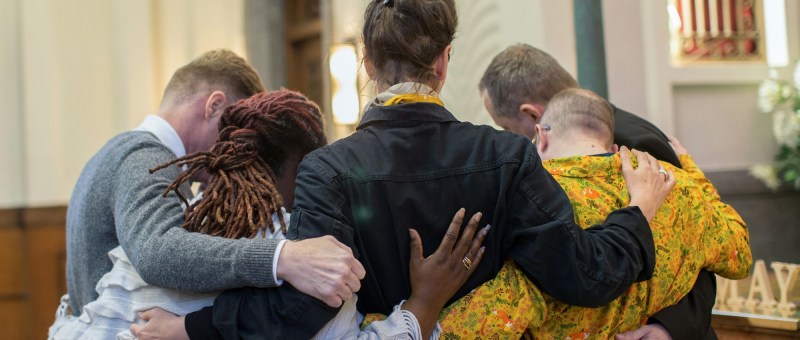

Comforting Those Who Grieve

History was made this last Tuesday with the presidential election. No matter which side you fall on, or if you’re one of the millions who didn’t fit neatly in any bracket, we have to admit there were countless firsts throughout the entirety of the election. At the end of the day, someone and multiple other people lost. That’s the reality of an election.

But this one, well, this one just felt different. For the winners they feel vindicated and as if the skewed power dynamic has been righted. For those who lost, they feel scared, betrayed, and worried for the future. It’s often in moments like these that the winners take a victory lap (typically on social media) and the losers share their fears and apprehensions (also on social media).

In years past, these moments of sharing have lead to horrific conversations, falling out among friends and families, people leaving the church, and much more pain and heartache. As I sat thinking through the events of this past week I must be honest and say my first thoughts were frustration and questions. But then my heart began to break because I feared what may cause my friends who are hurting to walk away from the church and Jesus. In an election cycle that wasn’t simply political and partisan, and instead leaned heavily into the church world we call home, it is hard to not see the pain and hurt that happens here in those spaces.

As Christians we have a biblical mandate to walk with those who are grieving and to not take a victory lap (pride goes before the fall). I’m not saying don’t celebrate, but instead think of others first. Be willing to see them as Jesus does and to stand in the gap with and for them. This isn’t something we should do only after the election–though I must admit that the results have been the catalyst for this post–but something we as the church should be known for in all moments! We have a calling, an obligation, and a command to walk with, care for, and love our hurting brothers and sisters. The question is how do we do that well? Today I hope to share just a few ways we can offer comfort to those who are grieving in any circumstance.

Listen first.

This is key to caring for others and often something that people struggle with doing. We are quick to offer suggestions, to look toward fixing things, or to try to solve the problem. But when we do that we don’t listen well, and if we don’t listen well, we don’t know how to care because we won’t truly understand. So make sure to simply listen and by listening look to care well.

Seek to understand.

This goes hand-in-hand with listening first. When you listen well you can understand what is happening. It’s often in moments of grief, pain, and loss that people will articulate how they are feeling and perhaps their view of God. They may not be theologically correct, but in moments of pain they are simply grappling with their emotional hurt and thoughts. So instead of looking to correct or offer the proper perspective, look to understand and see what they are feeling. When you listen and understand then you obtain the permission relationally to offer insight and perspective.

Engage in empathy and sympathy.

Our ability to show that we are with and for someone who is grieving is paramount to helping them process and heal. That means we need to show empathy and sympathy in those moments. Hurting with them. Understanding their pain. Relating with their feelings. For some this is easy but for others it’s difficult or uncomfortable, and much of this rests on our personalities. But regardless of where we fall individually, we must be willing to engage with these feelings.

When you can sympathize and show empathy, you’re helping to validate the hurting individual, showing you care and understand, and highlighting that you are a safe person. Think through what you say and don’t say, consider your body language, and understand how facial expressions play a role in these moments. When you consider those aspects you will find yourself engaging in more proactive and beneficial ways.

A word of caution though: don’t fake it and don’t pretend to understand when you don’t. Be honest in what you say and thoughtful in how you say it (i.e. you may not understand how they feel but you can say, “This grieves my heart and I am hurting for and with you.”)

Point toward hope.

Now I know what you’re thinking: of course we point them toward hope, it’s kind of our job! And yes, I hear you. We want to point people toward hope, but let me challenge you to be thoughtful and intentional in how you do this. There’s a reason I didn’t list this point first and it’s because we often jump into moments of grief with good intentions that often fall flat.

When someone is grieving the loss of a family member we might throw out 1 Thessalonians 4:13-18. When someone is wrestling with whether God cares, we throw out passages about Him caring for children or a poem about footprints. When people are wrestling with depression or anxiety and are grieving because they think God doesn’t see them, we hand them a passage about burdens being lightened. And yes, all these passages are true, and maybe taken a little out of context at times, but let me ask you something: is that what they need to hear right at that moment?

We serve a big God! A God who can handle our doubts, fears, questions, and even anger because He is God. And one of the best things you can do is allow people to express their tensions and then at the right moment to point them to the hope we have in Christ. This may not be right away, and that’s okay, but it must be a part of what we do in comforting them.

Walk with them.

This is one of the best things you can do when people are grieving. Stick with them. Check in on them. Follow up. When you do this, you are engaging in intentional, relational discipleship and you are showing that person they matter to you and to God.

This isn’t easy. Believe me on this. Depending on what people are walking through, how they are processing, and the depth of hurt, this can be a long and difficult road at times. But we are called to care for one another. To stand in the gap for those who need it. And to be the embodiment of Christ to this hurting world. When we walk with and stand for those who are grieving, we are living out the mission of Jesus.

How to Walk with Students Who Are Grieving

The loss of a family member. A relationship that crumbled. Mom and dad getting divorced. Making a big mistake.

Students grieve for a variety of reasons like we all do. But there’s something that pulls at our innermost being when we watch a student navigate pain and sorrow. We empathize and sympathize with them, feel their pain and grieve alongside of them. We want to fight for them, to right all the wrongs, and to wrap our beloved students in bubble wrap to protect them from all the harm and pain of this world.

While those emotions and responses of empathy and sympathy are valid and necessary, we must also think practically about how we can love, care for, and walk with our students as they navigate pain.

Involve trusted leaders.

This is something that I have found to be incredibly necessary and helpful in caring for students. Often I don’t get to be involved in our small groups due to how our ministry is structured and organized, so our small group leaders are the ones who consistently walk through life with our students. To bring them into what is happening and equip them to love, care, and engage with their students allows for multiple levels of care for our students and highlights inter-generational, discipleship-oriented relationships.

Reach out to them personally.

When appropriate, reaching out personally to students who are hurting is incredibly important because it shows them that they are seen and that you care. This can be through a text, a phone call, a visit, or taking them out to talk. This looks different depending on the circumstance and what is happening, but making that personal connection is key.

Connect with parents/guardians when warranted.

This is something that may get missed depending on the circumstance the student is going through. Of course we all know that there are specific moments when we have to include parents, but do we think about connecting with parents when students are mourning a broken relationship, a failed class, or when a student messes up?

I know the tension that can exist in the sense of not breaking a student’s confidence, but if the situation is affecting the student in profound ways then appropriately involving parents is warranted and needed. So consider bringing in parents so they can understand, love, and walk with their students. Make sure you highlight some suggestions on how to do so as you provide insight and understanding for them.

Bless them with a note and/or a gift.

When possible and appropriate, sending flowers, a note, a gift card, or groceries can be wonderful ways of helping students feel seen, understood, and cared for. These tangible metrics help students know that they matter and that you care. While I wouldn’t suggest this as the only option of care, when coupled with personal connection and relationships these opportunities will truly help our students move through the difficult moments they are facing.

Take them out.

This is something I do and encourage my leaders to do when appropriate. Meeting up for a cup of coffee, at a diner, or a local donut shop to simply sit and listen does so much for a student because you’re showing them that an adult loves and cares for them. By providing a safe place and a snack or meal, it removes pressures and expectations and allows for students to lower their walls and be honest about their hurt and grief. It’s often in moments like this when students share honestly and authentically which provides us with an opportunity to love and care well for them.

Sit and listen.

This is a huge part of what we should be doing throughout any of the above points. Sitting and listening is key to understanding what students are feeling and going through, and showing them that they are valued and heard. It also allows you to understand the situation and how best to respond. When we listen well and engage in those moments we are showing the student that they matter and we are validating who they are and what they are feeling. Don’t listen just to “fix the circumstance,” listen to understand, empathize, sympathize, and walk with your students.

Be available.

Hurt, pain, and grief don’t happen on a schedule or when it’s convenient. They happen sporadically and spontaneously as life happens. That means often times these moments will not occur when it is not beneficial or timely for us, but we must be prepared and willing to be available.

I’ve had countless moments when tragedy has hit a student or their family, and I need to able to be present and available in as much as I am able. Sometimes that means showing up at their home when they’ve lost a family member, making a phone call when driving to an appointment, or texting a prayer and Scripture to them. Regardless of what availability looks like in the moment, being able to respond and engage well is key.

Refer out when necessary.

This is something I wish I had been taught in school and earlier in ministry. Here’s the thing: most pastors and ministry leaders are not counselors, psychologists, or experts in every field. That means we should not try to act like we are nor should we try to give answers and advice that we aren’t equipped to give.

Instead, we need to build a network of trusted and skilled people in various roles who can help love, care for, and support our students. That means being able to refer to trusted counselors, medical personnel, case workers, police, and crisis intervention specialists. This isn’t saying you aren’t good at your job or doing all you can, but to truly do well at ministering to students we need to provide them with the best overall support which means utilizing the best people we can to help do just that.