
 Written by
 Last Monday, we kicked off a new series called “Theme Night Ideas.” These posts are intended to help you think creatively about how you can help students invite their friends out to a non-threatening event that will hopefully encourage them to participate in your ministry long term. We shared some commitments we make to our students in order to help them reach out to their peers, and some creative aspects to add to every event like food, students sharing, and shortened small group times.
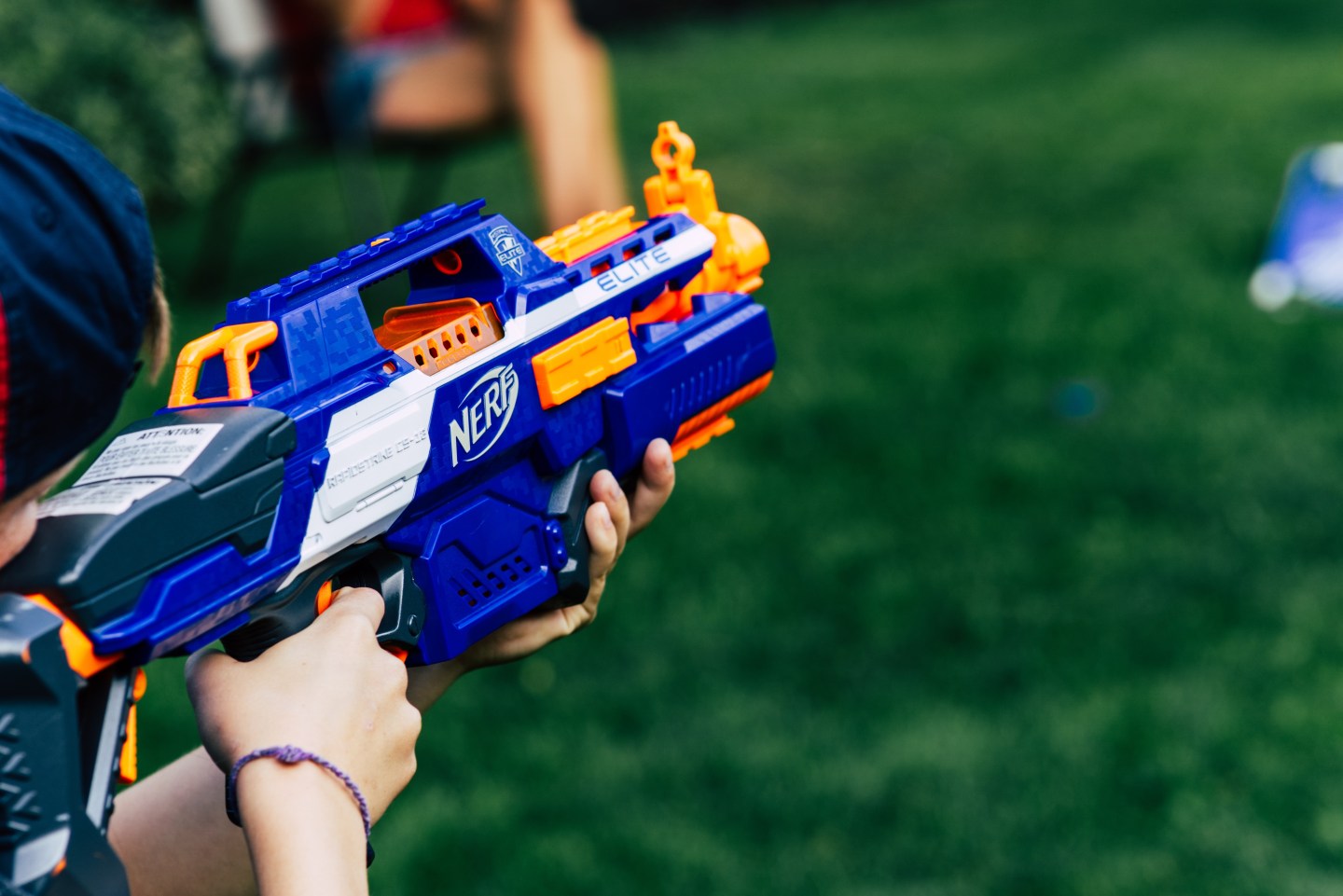
Today, we’re sharing an event we only recently started hosting at our church: a Nerf night. This was something I never really got behind because I didn’t think Nerf would resonate with our students, especially our high schoolers, and our more reserved students. But we had a couple of small groups meeting at our church one week and they had a blast playing Nerf throughout the building. So much so, they were telling all of their friends and they were begging my team to host a youth group Nerf night.
I began to look into what this entailed, and it actually ended up coming together relatively easily and it cost less than I had suspected. So what does a Nerf event look like? Well, we have our Nerf night coming up later this month, and I would like to share with you a variety of tips and things to think through to prepare for and make this event a success.
1. Think about your space.
Knowing what you have and what you can use is key for these games. Sometimes less is more depending on the size of your group. Other times, utilizing bigger and more open spaces may be ideal. But knowing what you have at your disposal and how to best utilize it will allow you to create an event that students will love.
2. Provide eye protection.
Eye protection is key for games with projectiles. Some Nerf blasters, like the Rival line, can fire fast and hard, and even a smaller blaster at close range can do serious damage to someone’s eye. So having some safety glasses or googles is a must. A quick Amazon search brings up multiple varieties or a Google search will bring up sites that have various options as well. Just make sure you look at shipping costs and times when you place an order.
3. Supply extra blasters and darts.
Typically students have their own blasters, but some do not or won’t want to bring their own out of fear of them being broken. So having some extras on hand would be extremely helpful. They don’t need to be super expensive or battery operated; they can be simple one shot style blasters or off brand blasters. I’d also recommend supplying the darts for the game. That way students don’t have to struggle to find their darts after the game and it ensures you’ll have enough.
4. Have ways to delineate teams.
Whether it’s pinnies, bandannas, or hats, having a way for students to know who is on their team and who isn’t is key to the success of most games. In games where teams are necessary, having a visual means of identifying teammates and opposing teams will allow students to have more fun and build a stronger desire to participate. Even if you can’t get pinnies or bandannas, think about having different colored yarns attached to players or using colored paper that is taped to shirts as a means of identifying the teams.
5. Know your game styles.
I’ll be honest: the first time we held a Nerf battle I thought I had everything planned out perfectly. I had a PowerPoint with rules and game play, I made sure there was no way to get around the rules, and I thought I had fun ideas that would work well. It didn’t. After two rounds of the original style, I switched it up and we went to a more flexible style of game play. What I found out was my rules were too strict and the game play to detailed. My students wanted a quicker and less restrictive game play.
We switched to a “capture the flag” style game with jails for those who got hit with a dart. We also incorporated ways to get people out of jail to make it more fun and engaging. We have done free-for-all style games to end the night where no one actually gets out. We’ve done leaders versus students. We have had “protect the president” style games where one team’s goal is to get the president and the other team’s goal is to protect them at all costs. We’ve done games where each person on a team can only use one bullet at a time throughout the game.
Whatever you decide to do, don’t be afraid to switch it up if it isn’t landing with your students. And don’t be afraid to ask them what they would like to do because you might find out that they have really good ideas.
6. Make sure your rules are clear.
One of our big rules is no shooting blasters when we aren’t in a game scenario. If we are going over rules, eating snacks, or simply hanging out, students don’t have to wear their eye protection. We tell students they can’t shoot in these moments because we don’t want someone getting shot in the eyes. It can really hurt and damage parts of the eye so we want to be hyper-vigilant in that area. We also make sure that our game time rules are clear and that we have leaders who help to direct game play.
7. Call audibles when needed.
Sometimes our best laid plans can be blown out of the water. And this can only be exasperated by our inability or unwillingness to shift and change when needed. The first time we hosted our Nerf Night, I should have changed how we did it but I refused to audible.
We hosted it during the summer and were hoping for more students but only a small number of our group came out. We had reserved a large portion of church for the event and rather than slim down the area, we kept it the same size. This meant that students were running around for longer periods and spent much of the playing time simply standing around or looking for people. It still worked out in the long run, but it would have been a lot more fun if we had made the size of the space more appropriate to our numbers.
We learned from this and the next time we played, we narrowed the game play space down and it worked out amazingly. Our students were more excited, they were laughing, games went faster which meant more people could play, and overall our students continued to ask to do it again. Calling audibles isn’t always easy or fun for us, but it can make it more enjoyable and exciting for our students which means they will be more willing to invite their friends to the event.
8. Plan out your barricades and boundaries ahead of time.
I don’t know about your church, but at ours there are certain items and spaces that are off limits. We can’t use our preschool space and we can’t move things around in certain classrooms. That means we need to get creative with where we play and what we use for barricades. It would be helpful to think through this ahead of time so when you explain the rules you can help students know what they are and are not allowed to use. Because, and trust me on this, there is always at least one very creative student who will find a way to incorporate an item you never thought you’d have to have a rule about; like a push cart with a trash can lid.
 kalosministry.net